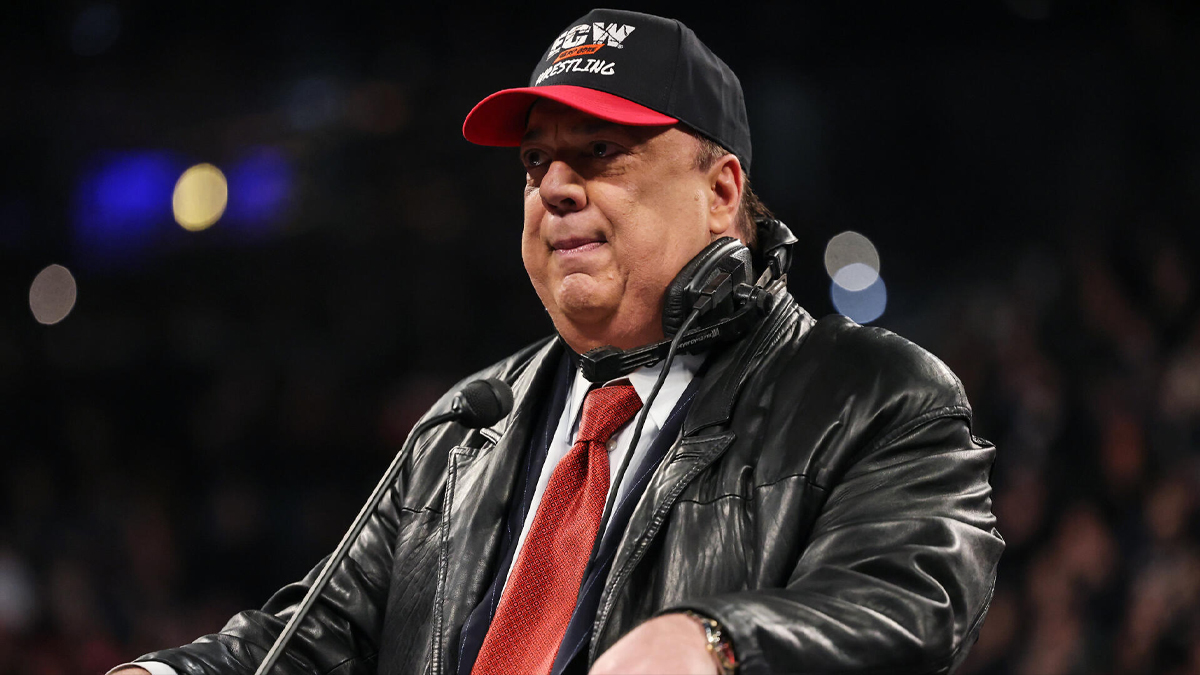
Paul Heyman revealed that he nearly left professional wrestling entirely after leaving WCW, with a lucrative radio offer almost keeping him from becoming one of ECW’s most influential figures.
The WWE Hall of Famer discussed the pivotal moment during a recent interview with Graham Bensinger, explaining how his dismissal from WCW left him determined to pursue a career outside the wrestling industry.
Paul Heyman had been working with the Dangerous Alliance, one of WCW’s leading villainous factions, when Bill Watts arrived to restructure the company. According to Heyman, Watts wanted to reduce talent contracts, something he refused to accept.
“I got fired from WCW, and I didn’t want to ever get fired again. I was the CEO of the Dangerous Alliance, which was the group of villains that was opposing the big heroes in WCW,” Heyman recalled. “And they brought in an executive to reshape the company named Bill Watts, and he wanted to cut everybody’s contracts, and I wasn’t going to take the pay cut.”
The disagreement ultimately led to Heyman’s departure, leaving him frustrated with the wrestling business at just 28.
“And I rebelled against it, and I ended up on the outs. And I was really p***ed off, and I was 28 years old, and I said, ‘Oh, I’m done with the wrestling business. I’m out.'”
Paul Heyman was serious about leaving and had already begun negotiating a move into radio broadcasting.
Jim Crockett Jr. Convinced Paul Heyman To Remain In Wrestling
Paul Heyman revealed that he was on the verge of signing a contract negotiated by the William Morris talent agency to host a morning radio programme in New York. The proposed show would have placed him in direct competition with legendary radio personality Howard Stern.
“So I was days away from signing the contract negotiated by William Morris to go on New York radio in the mornings, head-to-head with Howard Stern,” Heyman explained.
However, his plans changed following an unexpected telephone call from former wrestling promoter Jim Crockett Jr. Crockett was preparing to launch a new wrestling promotion and wanted Heyman to serve as its booker. Heyman initially rejected the offer, but Crockett challenged him over his previous criticism of the wrestling industry’s creative direction.
“And he said, ‘So all the b**hing that you’ve done about the other bookers, how far behind the times they are, how the business has lost the plot, it’s too embedded in its own thinking, that’s just you b**hing like everybody else? You mean you don’t really want to change it? You don’t really want to show everybody how progressive, how forward-thinking you are?'”
The conversation convinced Heyman to reconsider abandoning wrestling.
“He called my bluff,” Heyman admitted.
He later withdrew from the radio opportunity before signing the contract, frustrating those who had negotiated the deal.
“Man, was William Morris p***ed off. I backed out of the deal before we signed the contract.”
Around the same time, Paul Heyman’s booking mentor, Eddie Gilbert, oversaw creative for Eastern Championship Wrestling, a fledgling Philadelphia-based promotion. That organisation would eventually become Extreme Championship Wrestling, better known as ECW, with Heyman emerging as the creative force behind its rise.
His decision to remain in wrestling ultimately helped shape one of the industry’s most influential promotions, with ECW becoming renowned for its unconventional presentation and approach to professional wrestling.