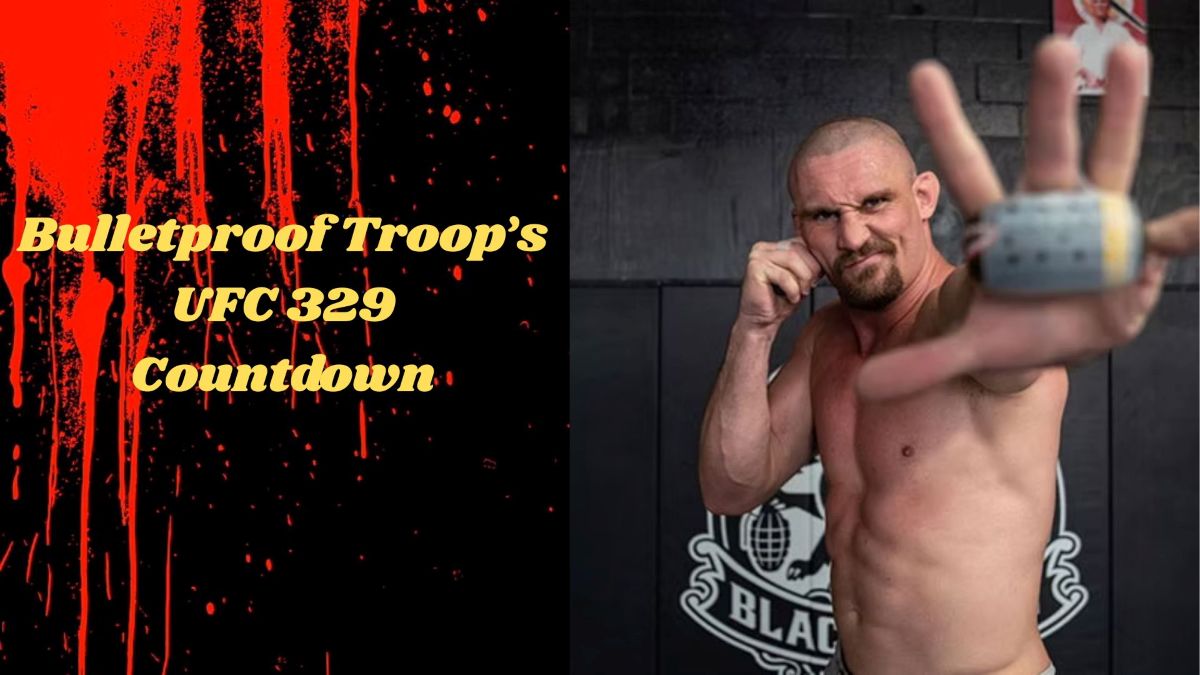
International Fight Week and UFC 329 delivers its biggest attraction in years Saturday night when Conor McGregor finally returns to the Octagon after nearly five years away from competition.
McGregor will face Max Holloway in a rematch more than 13 years after their original meeting, but this is nothing close to the same fight. McGregor and Holloway were young prospects when they shared the cage in 2013. Since then, both men have become world champions, all-time greats and two of the biggest stars the UFC has ever produced.
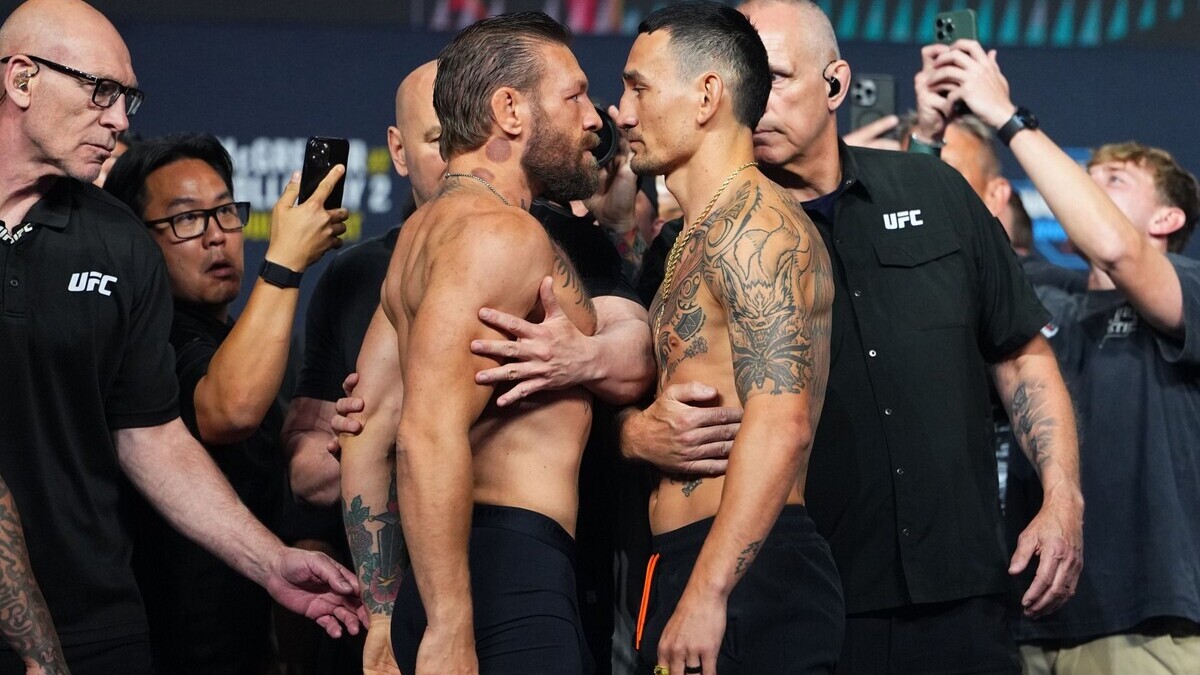
The rematch also takes place at welterweight, where Holloway will compete for the first time in his career. McGregor has already fought three times at 170 pounds, including his two battles with Nate Diaz and his 40-second knockout of Donald Cerrone. McGregor’s experience carrying the additional weight could become one of the most important factors in this fight.
The rest of UFC 329 is loaded with meaningful matchups. Paddy Pimblett attempts to rebound against the relentless Benoît Saint Denis, Cory Sandhagen and Mario Bautista meet again seven years after their first fight, Lone’er Kavanagh tries to continue his rapid climb against Brandon Royval, and King Green welcomes Terrance McKinney into what should be complete chaos.
Before the main card begins, former middleweight champion Robert Whittaker will make his light-heavyweight debut against Nikita Krylov in the featured preliminary bout.
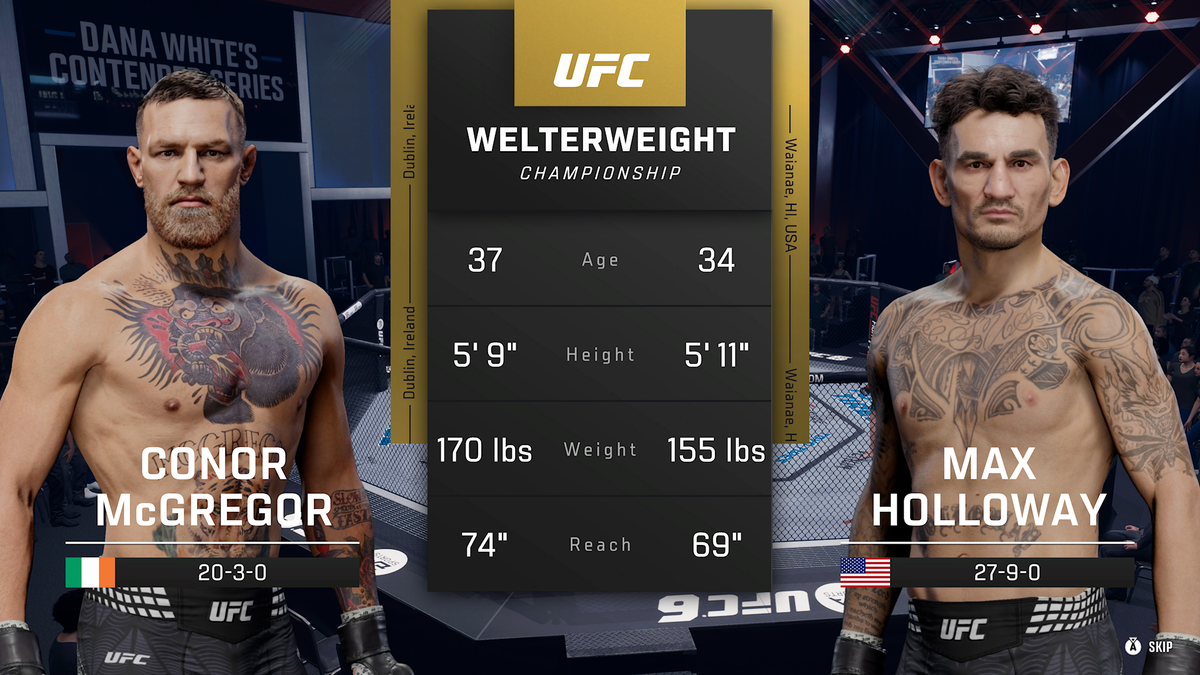
Welterweight Main Event: Conor McGregor vs. Max Holloway
There are easier fights to predict than this one, because no amount of film study can definitively tell us what Conor McGregor will look like after five years outside the Octagon.
The last time McGregor competed, he suffered a catastrophic leg injury against Dustin Poirier. His movement had already changed significantly before that injury. The younger version of McGregor was loose, fluid and constantly manipulating distance. He bounced in and out of range, switched rhythms, threw unusual kicks and made opponents feel as though they were chasing a target that was never quite where they expected it to be.
Later in his career, McGregor became more boxing-heavy. His hands improved, but he also became more planted. He was no longer moving with the same freedom that made him such a difficult puzzle during his rise through the featherweight division.
That does not mean the old McGregor cannot reappear. He is an incredible athlete with elite timing, legitimate knockout power and one of the most dangerous counter left hands in the history of the sport. The question is whether his body can still execute what his mind sees.
Holloway presents another major question because this will be his first fight at 170 pounds. We have seen Holloway perform well at lightweight, but welterweight is another jump. He will not have to drain his body through a difficult weight cut, and that could produce the strongest and best-conditioned version of Max Holloway we have ever seen. At the same time, adding weight can subtly change a fighter’s speed, reactions and ability to maintain his usual pace.
McGregor has already lived in that bigger body. Holloway is entering it for the first time. That is a real advantage for Conor.
The technical battle begins with the stances. Holloway normally operates from orthodox, with his left foot forward. McGregor is primarily a southpaw, placing his right foot forward. That creates what is known as an open-stance or mirrored-stance matchup.
When opposite stances meet, the geometry of the fight changes. Both fighters are competing to place their lead foot outside the opponent’s lead foot. Establishing that outside position can open a direct lane for the rear hand. In this matchup, it means McGregor is constantly searching for a clean path for his left hand while Holloway is trying to line up his right.
McGregor is a master of that game.
Watch his lead hand. He will reach out, touch, cup or press down on the opponent’s lead hand almost as though he is controlling a stick shift. This is not wasted movement. It gives him information about distance, interferes with the opponent’s jab and can temporarily occupy the hand that would normally defend his left.
Once McGregor establishes that hand control, he will sometimes lean his head and upper body forward, giving his opponent what appears to be an available target. The opponent reaches for him, McGregor pulls himself inches outside the punch, and the left hand comes straight back down the opening.
Eddie Alvarez repeatedly walked into versions of that trap during McGregor’s greatest performance. McGregor controlled the distance, drew Alvarez forward and made him pay almost every time he attempted to close it. McGregor’s precision, hand fighting and distance management allowed him to produce one of the most one-sided championship performances in UFC history.
That is also why I believe McGregor has been provoking Holloway.
During their face-off, McGregor removed Holloway’s glasses and threw them away. He later offered his hand before slapping Holloway’s hand down. It looked like typical McGregor showmanship, but the psychological game has always been connected to his physical strategy.
McGregor wants opponents angry. He wants them emotionally invested. He wants them coming forward harder than they normally would, because the more aggressively they chase him, the more opportunities he gets to set his traps.
Holloway cannot allow the press conference to dictate the opening minutes of the fight. He can pressure McGregor, but it needs to be intelligent pressure. There is a difference between taking space and chasing.
Max should use feints, attack the body and make Conor reset repeatedly. He cannot simply march straight into the left hand. Holloway must give McGregor different looks, occasionally switch stance, and avoid reaching with his punches when McGregor leans outside his range.
The longer the fight continues, the more it should favor Holloway. Max is one of the greatest volume strikers in UFC history, while McGregor’s effectiveness has historically declined when opponents have survived his early offense. Holloway should attack the body, force McGregor to work and make him carry the additional muscle through a five-round fight.
We have also seen Holloway make brilliant adjustments between fights. After Alexander Volkanovski attacked his lead leg and disrupted his boxing in their first meeting, Holloway returned with a drastically different approach. Rather than remaining at kicking range and accepting the calf kick, he closed distance more aggressively and crowded Volkanovski’s offense.
That showed me something important about Max: He does not just fight hard. He solves problems.
Holloway and his team know exactly what McGregor wants. They know about the outside-foot battle, the lead-hand fighting and the pull counter. The question is whether knowing about the trap will stop Max from stepping into it once the fight becomes emotional.
If Holloway remains disciplined, makes McGregor work and turns the fight into a battle of sustained pace, Max can take over as the rounds continue. If he becomes reckless, follows McGregor around the cage and reaches for him, he could give Conor exactly the fight he wants.
Most of the logical arguments favor Holloway. He has been active, his cardio is more dependable, and McGregor is attempting to return from a five-year layoff and a devastating injury against one of the best fighters of his generation. Several prominent analysts have consequently predicted that Holloway’s pace will eventually overwhelm McGregor.
But I am not making the safe pick.
The biggest moments have always brought something different out of Conor McGregor. If the movement is there, if the timing is still sharp and if Holloway allows himself to become the aggressor McGregor wants him to be, Mystic Mac has another highlight waiting for him.
My Prediction: Conor McGregor by second-round knockout.
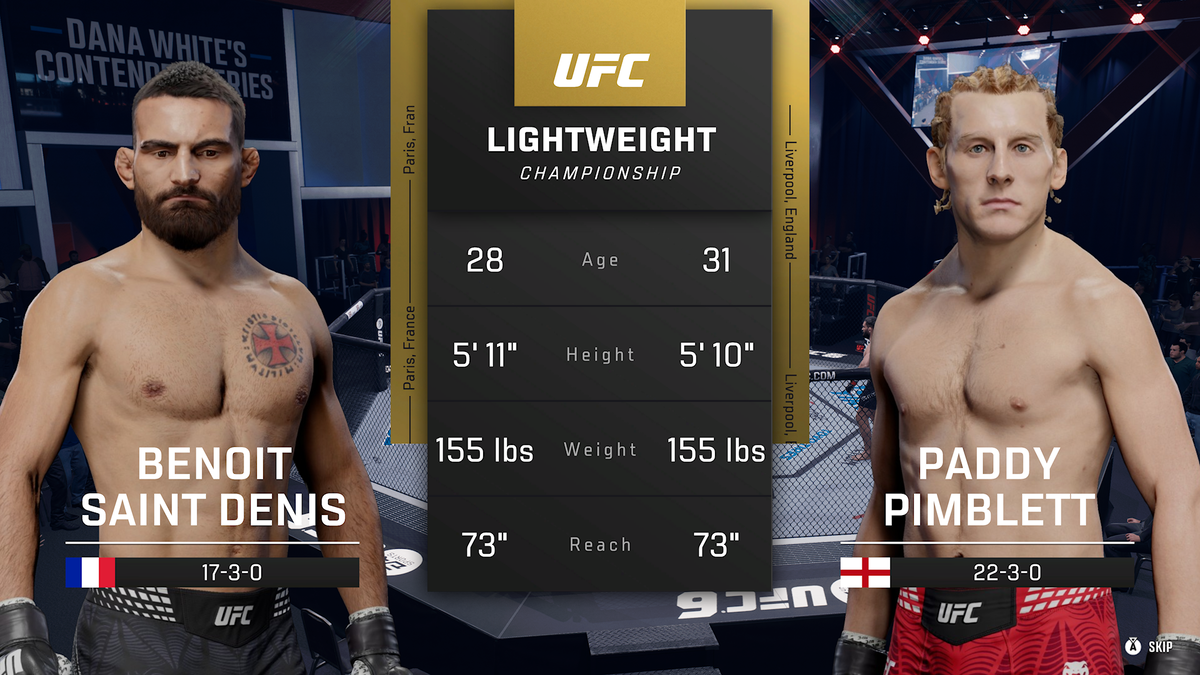
Lightweight Co-Main Event: Paddy Pimblett vs. Benoît Saint Denis
Paddy Pimblett’s undefeated UFC run ended when he challenged Justin Gaethje for the interim lightweight championship, but his performance may have improved his reputation more than several of his victories.
Pimblett did not win, but he proved that he could compete against elite opposition for five rounds. He absorbed Gaethje’s power, implemented specific counters and showed considerably more technical discipline than the reckless version of Pimblett we saw earlier in his UFC career.
Benoît Saint Denis represents a completely different kind of danger.
Saint Denis is not interested in giving his opponent time to settle into a fight. He pressures, kicks hard from the left side, crashes into the clinch and forces opponents to wrestle at an exhausting pace. He has responded to the setbacks of his 2024 campaign by winning four consecutive fights, all by finish.
The most obvious battle will be Saint Denis’ pressure against Pimblett’s ability to counter.
Pimblett is a very large lightweight. He is awkward, long and far more difficult to read than his mechanics sometimes suggest. His striking does not always look technically beautiful, but effectiveness and appearance are not the same thing. Pimblett uses front kicks, switch kicks and long punches to disrupt opponents before looking for opportunities to grapple.
His jab has improved, and his performance against Gaethje showed that he is becoming much better at building a game plan around a specific opponent rather than simply relying on confidence and durability.
Saint Denis should attack Pimblett’s body and lead leg while pushing him toward the fence. He cannot allow Paddy to stay at his preferred kicking range. Once he gets close, Saint Denis can use his clinch pressure and chain wrestling to make Pimblett carry his weight.
The danger is that Saint Denis is extremely hittable when he comes forward. His aggression often causes his head to rise and his defensive responsibility to disappear. Pimblett is capable of catching him with a counter, jumping on his neck during a bad takedown or reversing position during a scramble.
Both men are legitimate submission threats, but top position will be critical. Pimblett is creative from his back, but accepting bottom position against a fighter as physically relentless as Saint Denis is a difficult way to win rounds. Saint Denis can control the hips, land elbows and make every submission attempt more difficult as sweat and damage accumulate.
Professional fighters surveyed before the matchup were divided, with several favoring Pimblett’s size, durability and grappling while others sided with Saint Denis’ pressure. That division makes sense because both fighters possess tools that directly attack the other man’s weaknesses.
I expect Saint Denis to begin quickly and probably win the first round through pressure. The test comes when Paddy refuses to disappear. Pimblett has become more composed under fire, and Saint Denis’ aggression creates openings as the fight continues.
This could become ugly, exhausting and extremely competitive, but I believe Pimblett’s size, durability and improving tactical intelligence will allow him to survive the early storm and begin finding the cleaner work.
My Prediction: Paddy Pimblett by decision.
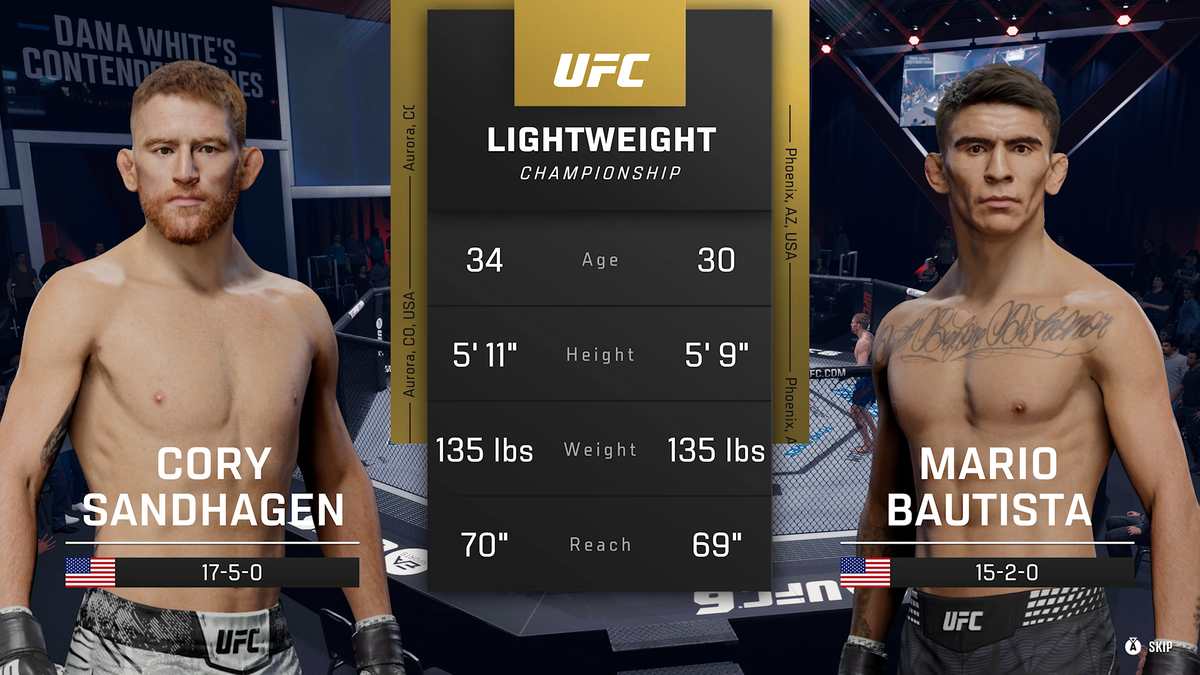
Bantamweight: Cory Sandhagen vs. Mario Bautista
Cory Sandhagen and Mario Bautista first met in 2019, when Sandhagen submitted Bautista with an armbar in the first round of Bautista’s UFC debut.
Seven years later, this might as well be an entirely new matchup.
Bautista has since developed into one of the division’s most complete pressure fighters. He works behind combinations, transitions smoothly into the clinch and uses his striking to disguise takedown attempts. He is especially dangerous during transitions, when opponents are moving from striking to wrestling or attempting to escape the fence.
Sandhagen has evolved just as dramatically. He entered the UFC as a long, creative kickboxer with dangerous scrambling ability. He has since added legitimate offensive wrestling, improved takedown defense and a more complete understanding of how to combine every phase of MMA.
Sandhagen will have the advantage at long range. His jab, stance switches, kicks and unpredictable entries make it difficult for opponents to determine where the next attack is coming from. He can throw a conventional boxing combination, change stance, attack the body and then turn the same movement into a takedown.
Bautista needs to close that distance without simply following Sandhagen. If he walks forward on a straight line, Sandhagen will jab, angle away and force him to restart. Bautista should use feints to draw reactions, then enter behind combinations before Sandhagen can establish his preferred rhythm.
The clinch may be Bautista’s strongest area. He can make Sandhagen work against the fence, attack takedowns and prevent the taller fighter from using his full striking arsenal. Even failed takedowns can help Bautista if they force Sandhagen to defend rather than create.
The problem is that Sandhagen has become extremely effective at punishing predictable pressure. His intercepting knees, reactive takedowns and ability to take angles make reckless entries dangerous.
This is likely to be one of the most technical fights on the card. Bautista will have moments, especially when he turns striking exchanges into clinch battles, but Sandhagen has spent years competing against the absolute best fighters in the division.
I trust Sandhagen’s range management, experience and ability to make adjustments slightly more.
My Prediction: Cory Sandhagen by decision.
Flyweight: Brandon Royval vs. Lone’er Kavanagh
Brandon Royval has built his career by turning technically structured fights into complete disorder.
Royval is long for the flyweight division, throws an extraordinary amount of offense and is willing to attack from almost any position. He pressures with punches, knees and kicks, then looks for submissions when opponents attempt to wrestle or scramble away.
Lone’er Kavanagh is a more controlled and explosive striker. He manages range with fast kicks, moves quickly in and out of the pocket and carries serious power for the division. His victory over former champion Brandon Moreno immediately established him as a legitimate contender, although his earlier loss to Charles Johnson demonstrated that his pace can decline when an opponent survives his explosive attacks and forces him to work continuously.
Kavanagh should have the speed and power advantage. Royval should have the advantages in length, activity and prolonged chaos.
The key for Kavanagh will be convincing Royval to come forward. He can accomplish that by attacking the lead leg and body from range. Once Royval feels he is losing the outside battle, his natural response will be to increase the pressure and throw combinations.
That is where Kavanagh’s counters become dangerous.
Royval cannot allow Kavanagh to fight in short, controlled bursts. He needs to make this uncomfortable from the beginning. He should attack the body, force extended exchanges and make Kavanagh work during every minute of the fight.
Royval’s best opportunity may come late. If Kavanagh slows, Royval’s volume could transform the final round into a desperate survival test. But Royval has also absorbed damage in recent fights, including consecutive defeats against Joshua Van and Manel Kape. Kavanagh is precisely the kind of fast, explosive striker who can punish Royval while he is attempting to build momentum.
I expect Royval to make the fight increasingly competitive, but Kavanagh should land the more damaging strikes and use occasional takedowns or clinch exchanges to interrupt Royval’s pressure.
My Prediction: Lone’er Kavanagh by round 2 TKO.
Lightweight Main Card Opener: King Green vs. Terrance McKinney
There may not be a fight on this card with a clearer dividing line.
Terrance McKinney is extremely dangerous at the beginning of a fight. King Green becomes more dangerous with every minute he survives.
McKinney is an explosive southpaw with knockout power, fast takedowns and a willingness to attack submissions immediately. He fights like someone trying to end the contest before his opponent fully understands what is happening.
Through his first 13 UFC appearances, McKinney reached the second round only twice. All eight of his UFC victories have come in the opening round, and he has never gone to the judges in his professional career. That tells the entire story. He either destroys his opponent early or spends so much energy trying that the fight begins moving against him.
The official weigh-in added another major concern to that equation.
McKinney successfully made the lightweight limit at 156 pounds, but he required the privacy box to get there. When he stepped off the scale, he looked extremely drawn and drained. Nobody can know exactly how a fighter’s body will recover simply by watching him weigh in, but to my eye, that looked like a very intense weight cut.
In my experience, a difficult weight cut puts handcuffs on the body’s ability to perform. The fighter may regain the weight by fight night, but that does not automatically mean the body has fully recovered. It can affect explosiveness, reaction time, punch resistance and, most importantly in this matchup, the amount of gas available once the initial adrenaline begins wearing off.
That is especially concerning for McKinney because conserving energy has already been one of the biggest questions surrounding his game. He is at his most dangerous when he is fresh, explosive and attacking with everything he has. If the weight cut has taken even a portion of that fuel away from him, we may see a much smaller gas tank than usual Saturday night.
Green presented the complete opposite image. He made weight comfortably at 155.5 pounds, looked loose and energetic, and was dancing around as though the cut had barely affected him. Appearances at weigh-ins do not decide fights, but when one athlete already depends heavily on early explosiveness and appears depleted while the other looks relaxed and full of energy, it has to be considered.
Green has more than 50 professional fights, excellent eyes and the kind of relaxed timing that only comes through decades of competition. He keeps his hands low, slips punches from unusual positions and fires straight counters while talking to his opponents.
Keeping his hands low against McKinney is obviously dangerous. Green’s durability is no longer what it was earlier in his career, and he has been hurt by larger, explosive lightweights. McKinney only needs one clean opening to completely change the fight.
Green’s experience is still his greatest weapon. He understands how to make an opponent miss, how to force resets and how to recognize when a fighter’s energy begins to fall. Against someone who may already be entering the cage with a compromised gas tank, those skills become even more important.
Green would also be wise to mix in reactive wrestling. He does not necessarily need to hold McKinney down. He only needs to make him defend, scramble, carry weight and repeatedly stand back up. Every explosive movement becomes another withdrawal from an energy account that may already be partially empty.
McKinney’s best chance is to pressure patiently, trap Green near the fence and explode once Green has less space to pull away. He cannot sprint forward carelessly and reach for the knockout. Green is at his best when opponents overextend and give him an obvious counter.
There is absolutely a world in which McKinney knocks Green unconscious in the opening minute. He remains one of the most dangerous first-round fighters in the UFC. But if Green survives those first attacks and forces McKinney to continue working, this fight could change very quickly.
The difficult cut only strengthens the dividing line that already existed. McKinney needs an early finish. Green needs to remain calm, make him miss and drag him into deeper water.
Once the fight reaches the middle of the first round, Green should begin seeing the attacks more clearly. McKinney’s movement will slow, the veteran’s accuracy will take over, and the energy difference we saw on the scale may become impossible to hide.
My Prediction: King Green by third-round technical knockout.