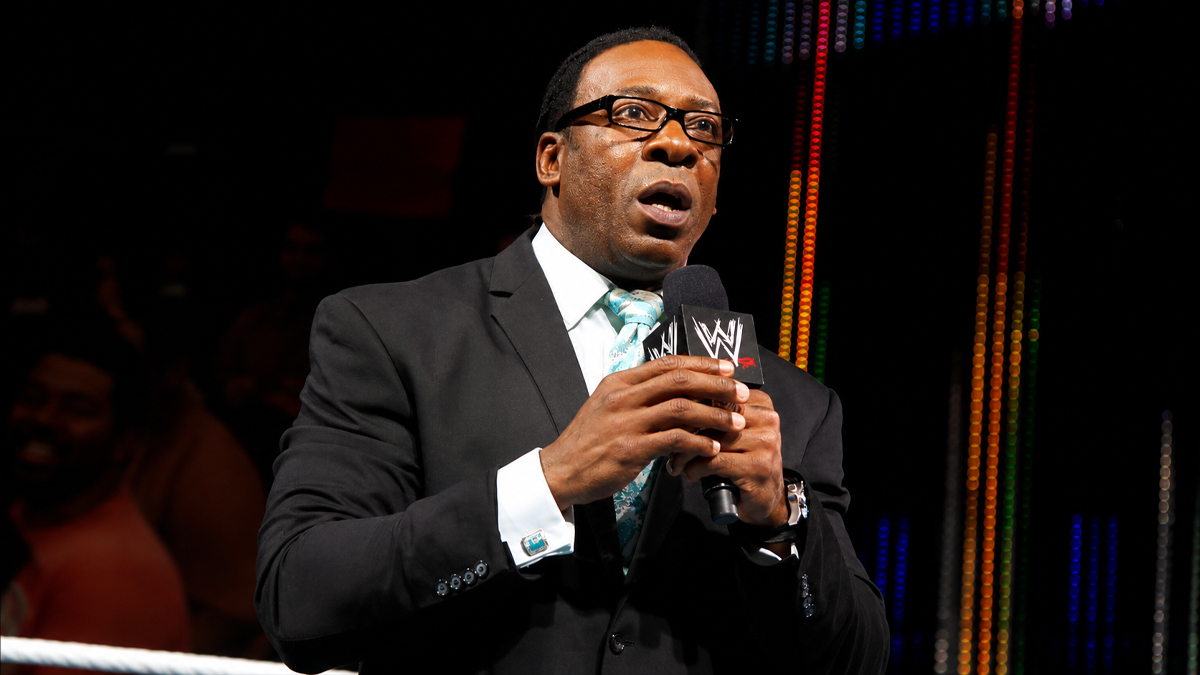
Booker T believes the growing trend of wrestlers repeatedly using their finishing moves in major matches has become a problem in modern professional wrestling.
Speaking on his Hall of Fame podcast, the WWE Hall of Famer agreed with co-host Brad Gilmore’s criticism of what many fans call “finisher spam,” in which competitors kick out of finishing moves multiple times during a match. Gilmore pointed to Brock Lesnar‘s victory over Oba Femi at Clash in Italy as a recent example, noting that Lesnar needed seven F5s to finally put away the former NXT Champion.
“I don’t like that, because it’s called a finisher,” Gilmore said.
While acknowledging there are occasions when repeated kick-outs can enhance a story, Gilmore argued that the device is most effective when it serves a specific narrative. He cited Shawn Michaels‘ classic WrestleMania 25 match against The Undertaker as an example in which the drama was built around escalating stakes.
Booker T agreed with the criticism and admitted the practice has become overused.
“No, you’re not old school in your way of thinking,” Booker said. “I think that’s a huge problem.”
While opinions remain divided on the use of multiple finishers in modern wrestling, Booker made it clear that he believes the trend has diminished the impact of moves that were once designed to end a match.
Booker T Compared His Experience In WWE & WCW To Modern Wrestling
The discussion later expanded into the differences between modern wrestling styles and how competition between promotions can help improve the overall product.
Drawing on his own experiences during the Monday Night Wars, Booker T reflected on the rivalry between WWE and WCW, arguing that both companies were forced to elevate their performances under the pressure of competition. He specifically pointed to WWE’s roster at the time, which featured stars such as The Undertaker, Steve Austin and The Rock.
“Those guys went out there on Monday night in the middle of that square circle, and they brought it,” Booker said.
The former world champion admitted that while he was competing for WCW, there were times he wished he could have been part of what was happening on the other side of the wrestling war.
“A lot of those nights I was wishing I was over there getting a chance to be a part of that,” he said.
Booker ultimately argued that competition remains one of the driving forces behind success in professional wrestling and believes today’s promotions are no different.
“You run faster when somebody’s chasing you,” Booker said.