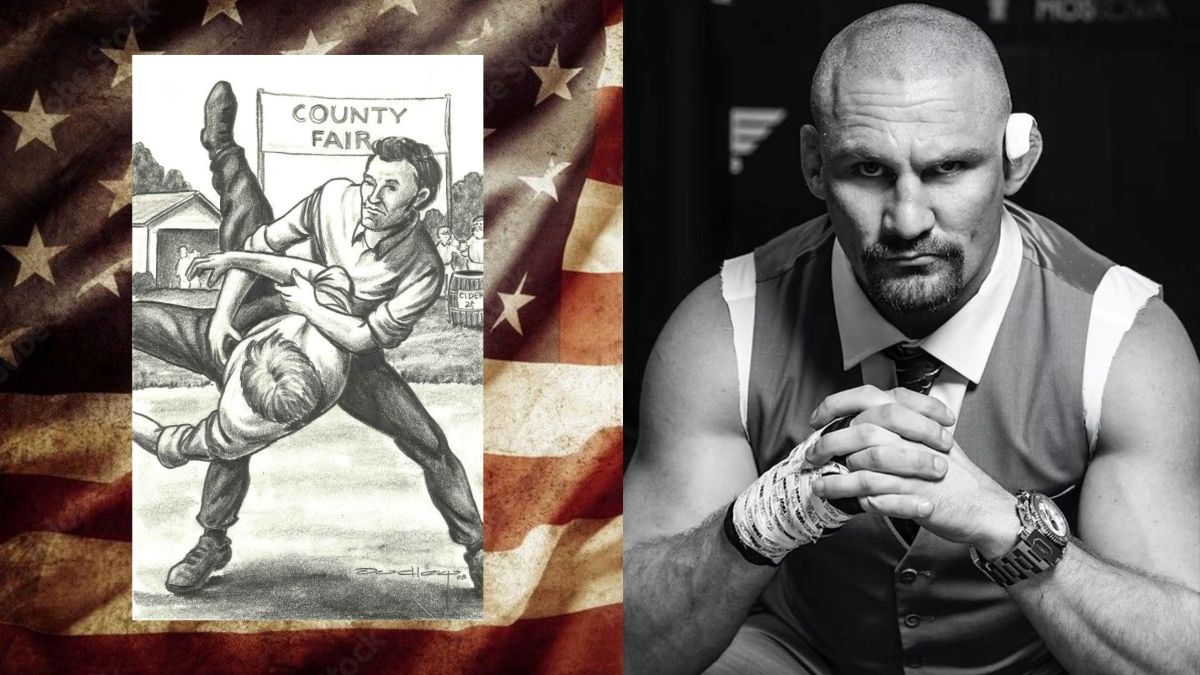
Editor’s Note: As Slam! Wrestling is now incorporating Mixed Martial Arts into its annals, and we realized we needed to be experts in the subject to speak eloquently on the sport. In short, our focus needed to be “bulletproof” in this Catch Corner.
Enter Blake “Bulletproof” Troop. He is no stranger to our website, as we have featured him on multiple occasions over the years. He is an MMA fighter with Lights Out XF and is currently affiliated with Booker T’s “Reality of Wrestling” promotion.
With the 4th of July approaching, Troop gave us his next column to provide more history on why wrestling is important, especially in the early days of the United States.
Honest.
Before He Was President: Abraham Lincoln the Wrestler
When professional wrestling fans think about famous wrestlers, names like Lou Thesz, Karl Gotch, Billy Robinson, and Danny Hodge usually come to mind. Rarely does anyone think of Abraham Lincoln.
That’s a mistake. Because, believe it or not, Lincoln was inducted into the National Wrestling Hall of Fame back in 1992.
Let’s get into it.
Long before he became the 16th President of the United States, long before he delivered the Gettysburg Address or guided the country through the Civil War, Abraham Lincoln was known across the Illinois frontier for something entirely different: wrestling.
In fact, Lincoln’s reputation as a wrestler was so well known that it became part of his public image throughout his political career. According to Britannica, Lincoln may have competed in hundreds of matches and was widely recognized as one of the toughest men in the region. Some historians have even suggested that his reputation as a wrestler helped build the larger-than-life image that contributed to his rise in politics decades later.
For wrestling fans, that’s a fascinating piece of history because the style Lincoln practiced was known as “rough-and-tumble frontier wrestling,” essentially a regional form of catch wrestling. It wasn’t identical to the organized catch wrestling that later emerged from Lancashire, England, and spread worldwide, but it was part of the same family tree. This was wrestling stripped down to its essentials. There were few rules, little structure, and one goal: throw the other man down and establish dominance.
In many ways, Lincoln was competing in the same rough frontier environment that helped shape the culture from which modern catch wrestling eventually emerged.
At six-foot-four, Lincoln was an imposing figure for the era. Frontier life was hard, physical work. Splitting rails, clearing land, farming, and manual labor built a kind of functional strength that can’t be replicated in a gym. By the time Lincoln arrived in New Salem, Illinois, he had already developed a reputation for unusual strength and athletic ability.
That reputation would soon be tested.
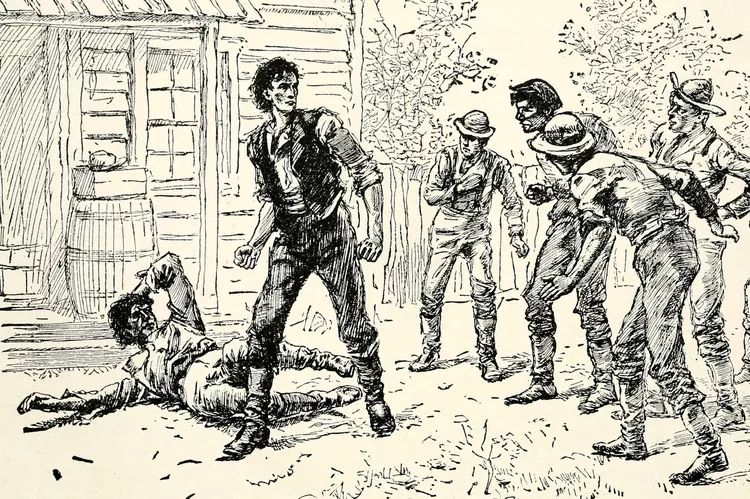
One of the most famous stories from Lincoln’s wrestling career involves Jack Armstrong, the leader of a local gang known as the Clary’s Grove Boys. Armstrong was considered the toughest man in the area and challenged Lincoln to a wrestling match. Accounts vary on exactly what happened, but the general story remains remarkably consistent. Lincoln proved more than capable of handling himself. When Armstrong and his friends allegedly attempted to make the contest less than fair, Lincoln stood his ground and refused to back down. Rather than damaging his reputation, the encounter elevated it. The local toughs who expected to embarrass him instead gained respect for him.
For modern wrestling fans, it’s easy to see the familiar pattern. The local champion. The newcomer. The challenge match. The crowd is gathering to see who the toughest man really is. Those ingredients existed long before wrestling became a worked entertainment product. They were part of legitimate wrestling culture on the American frontier.
Perhaps the most interesting wrestling story involving Lincoln happened during the Black Hawk War in 1832.
Lincoln had been elected captain of his militia company despite having no formal military experience. While serving with the militia, a dispute arose with another militia company over a desirable campsite. Rather than settling the issue through rank or argument, the matter was settled the way many frontier disagreements were settled: through wrestling.
Lincoln accepted the challenge.

What makes the story remarkable isn’t the loss itself. Wrestlers understand better than most people that losing a match doesn’t define a competitor. What matters is being willing to step onto the mat in the first place.
In fact, Lincoln’s willingness to wrestle was part of what made him respected among his peers. Frontier America valued toughness, courage, and the willingness to test yourself. Lincoln repeatedly demonstrated all three.
That’s one of the reasons his wrestling background followed him into politics.
Today, candidates carefully craft public images through television appearances, social media, and campaign consultants. Lincoln’s generation built reputations differently. Stories traveled by word of mouth. Communities remembered who was trustworthy, who was courageous, and who could handle themselves when challenged.
Lincoln’s wrestling exploits became part of that reputation.
He wasn’t simply known as a lawyer or politician. He was known as a man who had physically tested himself against other tough men and earned their respect. In frontier communities where physical capability and personal character were deeply connected, that mattered. A lot.
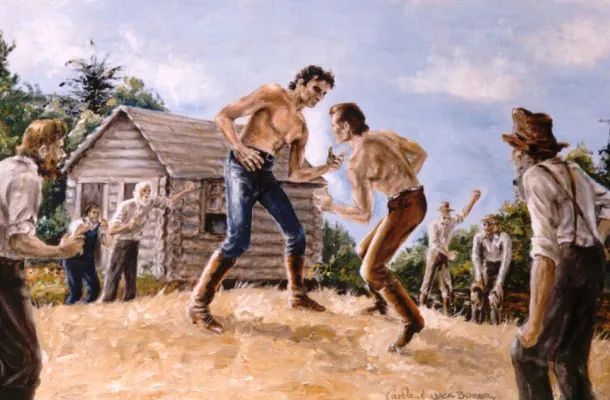
For professional wrestling fans, Lincoln’s story also serves as a reminder of just how deeply wrestling is woven into American history. Before there were world champions, television contracts, WrestleManias, or pay-per-views, wrestling was one of the primary ways men proved themselves. It settled arguments. It established status. It built reputations.
Abraham Lincoln understood that world because he lived in it.
The next time someone claims wrestling isn’t part of mainstream history, remind them of one simple fact: one of the most important presidents in American history wasn’t just a politician.
He was a wrestler first.
You can personalise your Google settings to see more stories from slamwrestling.net when you search for wrestling news.
Google’s Preferred Sources feature lets you choose the websites you trust most. Once added, Google is more likely to show SLAM in Top Stories and the “from your sources” section.
- Click this link to take you directly to Google’s “Source preferences” page.
- Sign into your Google account.
- Search for slamwrestling.net.
- Tick the box next to Slam Wrestling.
Adding SLAM as a Preferred Source helps you see more of our news, features, and exclusive coverage in Google search.