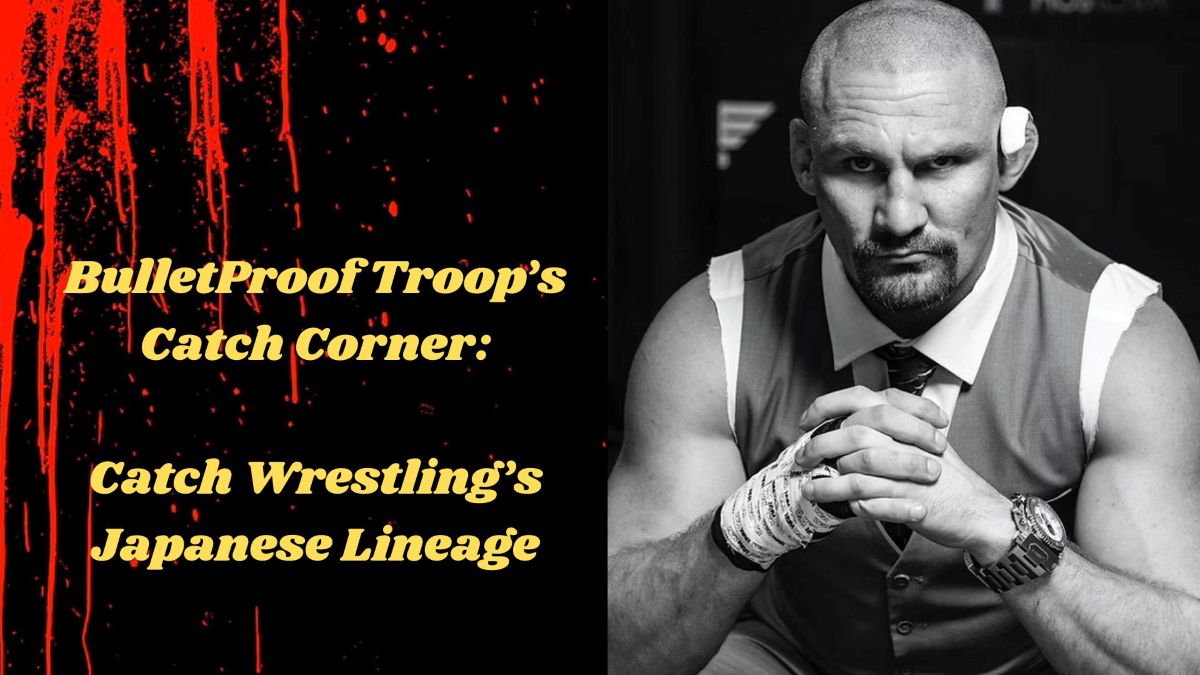
Editor’s Note: As Slam! Wrestling is now incorporating Mixed Martial Arts into its annals, and we realized we needed to be experts in the subject to speak eloquently on the sport. In short, our focus needed to be “bulletproof” in this Catch Corner.
Enter Blake “Bulletproof” Troop. He is no stranger to our website, as we have featured him on multiple occasions over the years. He is an MMA fighter with Lights Out XF and is currently affiliated with Booker T’s “Reality of Wrestling” promotion.
This column has Troop giving us a history lesson on the evolution of catch wrestling in the Land of the Rising Sun.
From Hookers to Hybrid Wrestling: Catch Wrestling’s Japanese Lineage
Catch wrestling was never just a style. It was a mindset – a system built on control, pressure, and the ability to make another man quit, not because he wanted to, but because he had no other option. That DNA didn’t disappear. It evolved. And nowhere did it evolve more faithfully than in Japan, where the core values of catch wrestling held stronger, shaped by the influence of one man who refused to let it become anything less than real: Karl Gotch.
Gotch’s philosophy was simple but unforgiving. Everything had to work. Conditioning wasn’t optional. Technique wasn’t for show. If you stepped on the mat, you were expected to be able to impose your will on another trained man. When he brought that ideology to Japan, it didn’t get softened for entertainment – it was absorbed and built upon. His students would go on to shape the foundation of Japanese professional wrestling through New Japan Pro-Wrestling, All Japan Pro Wrestling, RINGS, Shooto, and UWF. Their approach emphasized fighting spirit, struggle, and realism – an expectation that even within a structured environment, what you were watching had to feel like a contest.

While the American scene evolved toward spectacle – driven largely by the global rise of WWE, where character, storyline, and presentation became the dominant forces – Japan took that same foundation and pushed it in a different direction. Not better. Not worse. Just different. A direction that stayed rooted in competition.
That direction gave birth to the shoot-style.
Promotions like UWF International, RINGS, and Pancrase didn’t just reinterpret catch wrestling – they operationalized it. They created an environment where matches, even when structured, were presented with a level of realism that forced the audience to suspend disbelief in a different way. Not through characters, but through consequence.
UWF International, led by figures such as Nobuhiko Takada, leaned heavily toward a stripped-down presentation. Rope breaks were limited. Point systems were used. The matches emphasized submissions, knockdowns, and positional dominance. It looked less like a performance and more like a contest unfolding in real time. The aesthetic was minimal, but the intensity was high, and that made everything feel closer to the roots of catch wrestling.
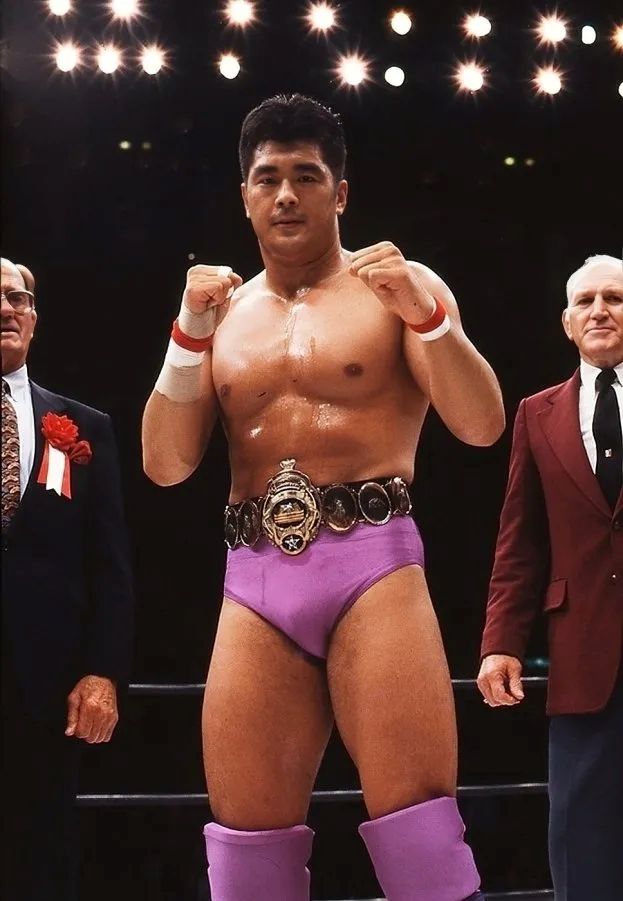
RINGS, founded by Akira Maeda, pushed that evolution even further. It became a bridge between worked shoot-style and legitimate competition. Early RINGS events blurred the line so effectively that fans weren’t always sure where the performance ended and the fight began. That ambiguity wasn’t a flaw… it was the point. Fighters like Volk Han became known for their technical mastery, showcasing a level of grappling that directly reflected catch wrestling’s emphasis on control, leverage, and relentless pressure.
Then there was Pancrase, founded by Masakatsu Funaki and Minoru Suzuki. Pancrase took the next logical step. Open-hand strikes, real submissions, and a rule set that allowed for legitimate finishes created a system that sat right on the edge of modern MMA. This is where names like Ken and Frank Shamrock, as well as Bas Rutten, emerged as dominant forces.
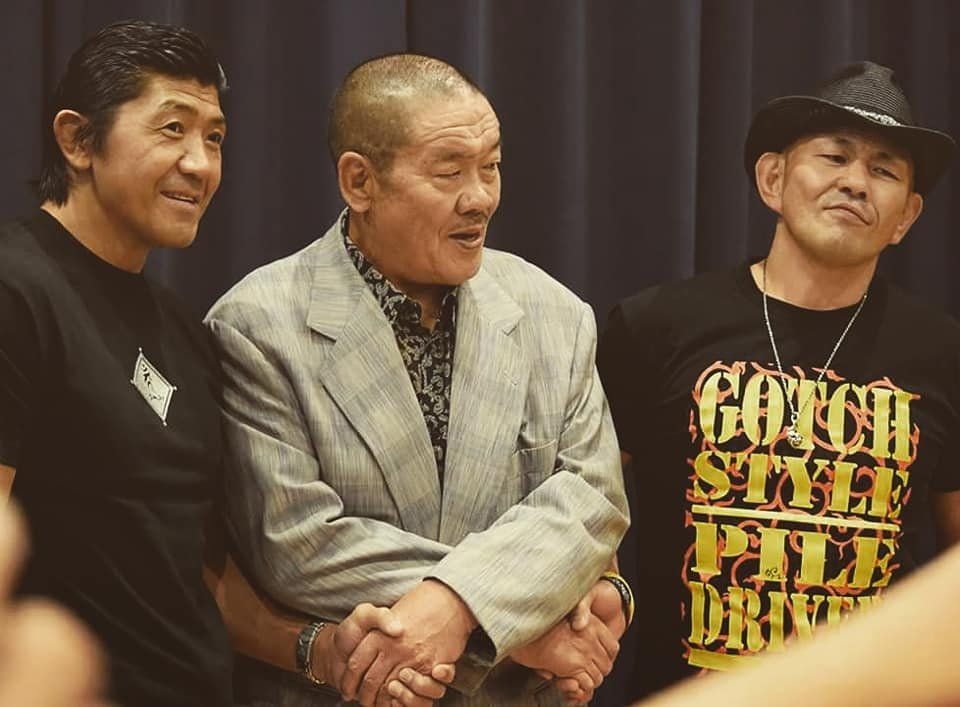
They weren’t just performers. They were fighters operating in a hybrid system that demanded real effectiveness. What they were doing wasn’t a throwback – it was a forward step, built directly on catch wrestling principles.
These promotions didn’t exist in isolation. They reinforced and influenced the broader Japanese wrestling ecosystem, including New Japan Pro Wrestling and All Japan Pro Wrestling. The expectation of realism, the emphasis on struggle, and the visual language of competition all fed back into what came to be known as strong style. Even in fully worked environments, the matches carried weight because they were built on sound mechanics. Strikes landed with intent. Submissions were fought, not given. The audience wasn’t just watching a story – they were watching a contest unfold within a story.
That’s the key distinction. Catch wrestling’s core wasn’t about moves – it was about forcing reactions, creating pressure, and making another person break. Japanese wrestling, particularly through shoot-style and its influence on strong style, preserved that philosophy. It maintained the belief that what you were seeing could be real, even when you knew it wasn’t.
And from there, the connection to modern combat sports becomes undeniable. The fighters, the rule sets, the pacing – it all points forward. Pancrase and RINGS didn’t just resemble MMA. They helped build it.
Catch wrestling didn’t disappear. It evolved along two different paths. One became a global spectacle, driven by characters and storytelling, built to reach the widest possible audience. The other stayed closer to its competitive roots, shaped by realism, and carried forward through a culture that valued the spirit of the fight.

But if you want to see where the pressure, the control, and the underlying sense of competition stayed closest to what catch wrestling was built on, you don’t have to go back in time.
You can look at what Japan built – and what they refused to let go.
You can personalise your Google settings to see more stories from slamwrestling.net when you search for wrestling news.
Google’s Preferred Sources feature lets you choose the websites you trust most. Once added, Google is more likely to show SLAM in Top Stories and the “from your sources” section.
- Click this link to take you directly to Google’s “Source preferences” page.
- Sign into your Google account.
- Search for slamwrestling.net.
- Tick the box next to Slam Wrestling.
Adding SLAM as a Preferred Source helps you see more of our news, features, and exclusive coverage in Google search.