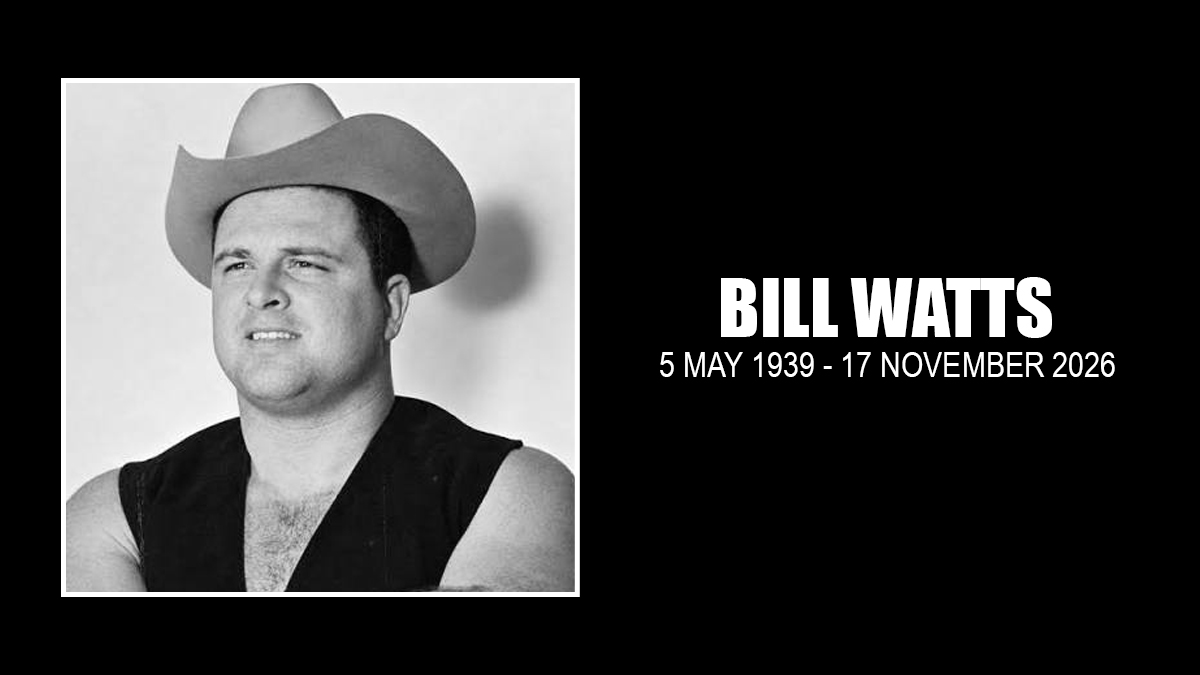
WWE Hall of Famer and legendary wrestling promoter “Cowboy” Bill Watts has died at 87.
The news of Bill Watts’ passing was confirmed Tuesday by his son, Erik, who told veteran wrestling journalist Bill Apter. Apter subsequently announced the news in a video published on YouTube.
Watts was one of the most influential figures in territorial wrestling, establishing himself as both an in-ring performer and a promoter before becoming best known for leading Mid-South Wrestling. His death came just one week after the wrestling world learned of the passing of another former WCW executive, Jim Herd, who also died at age 87.
Watts rose to prominence through his work with Mid-South Wrestling, which later became the Universal Wrestling Federation (UWF). Under his leadership, the promotion became one of the most successful wrestling territories in the United States, featuring stars such as Junkyard Dog, Ted DiBiase, The Fabulous Freebirds and “Hacksaw” Jim Duggan.
Mid-South also played an important role in developing future wrestling personalities, providing Jim Ross with his start in the industry and serving as an early destination for Sting. The promotion’s influence continues into the modern era, with AEW President Tony Khan among those who have publicly expressed admiration for Mid-South Wrestling.
Bill Watts’ Controversial WCW Career And Wrestling Legacy
Following his success in Mid-South, Bill Watts took on a creative role with WCW during the early 1990s. However, his tenure proved controversial, as Watts attempted to introduce a more traditional wrestling product and implemented restrictions, including banning moves from the top rope.
His time with WCW ultimately ended amid controversy surrounding racist remarks made during an interview with PWTorch. During the interview, Watts argued that businesses should have the right to discriminate against Black customers.
The comments reportedly attracted the attention of baseball legend Hank Aaron, who was associated with Turner Broadcasting at the time. Aaron was said to have strongly condemned the remarks and pushed for Watts to be removed from his position.
Watts subsequently disputed claims that he had been fired, maintaining that he had chosen to resign from WCW. He also argued that his comments had been taken out of context and claimed that the company had been aware of the interview before appointing him.
Watts defended his record of promoting Black wrestlers and pointed to his Cherokee ancestry while responding to the controversy. Following his departure from WCW, Watts later spent a brief period working behind the scenes for the WWF.
Despite the controversies surrounding his career, Watts received significant recognition for his contributions to professional wrestling. He was inducted into the Wrestling Observer Newsletter Hall of Fame as part of its inaugural class in 1996 before receiving induction into the WWE Hall of Fame in 2009.
Bill Watts leaves behind a complicated legacy, remembered for his considerable influence on territorial wrestling and the development of numerous major stars, alongside the controversies that marked his later career.