You can personalise your Google settings to see more stories from slamwrestling.net when you search for wrestling news.
Google’s Preferred Sources feature lets you choose the websites you trust most. Once added, Google is more likely to show SLAM in Top Stories and the “from your sources” section.
- Click this link to take you directly to Google’s “Source preferences” page.
- Sign into your Google account.
- Search for slamwrestling.net.
- Tick the box next to Slam Wrestling.
Adding SLAM as a Preferred Source helps you see more of our news, features, and exclusive coverage in Google search.
The air in the Honda Center in Anaheim, California on February 14, 2011, felt different. It wasn’t just the standard “Road to WrestleMania” hype. When the lights dimmed and those iconic electrified riffs hit the PA system, the roar was deafening. The Rock was back. To the millions watching, it felt like a homecoming. To the locker room standing behind the curtain, it was the first tremor of an earthquake that would eventually swallow the “full-time” professional wrestler whole. We thought we were getting a nostalgic bridge to the past; in reality, we were witnessing the death of the future.
The Illusion of 2011: Nostalgia as a Trojan Horse
2011 should have been a transformative year for the “New Era.” Names like CM Punk, The Miz, and Alberto Del Rio were clawing for the spotlight. Instead, WWE leadership blinked. They looked at their declining ratings and reached for the “In Case of Emergency” glass, shattering it to reveal The Rock, Stone Cold Steve Austin, and Trish Stratus.
On the surface, it worked. WrestleMania 27 did massive business, but it set a dangerous precedent: the biggest stage in the industry no longer belonged to the people who worked 300 days a year. It belonged to the ghosts of the Attitude Era.
The message from Stamford was loud and clear: Your current favourites aren’t enough.
The Return of the Mercenary: The Brock Lesnar Effect
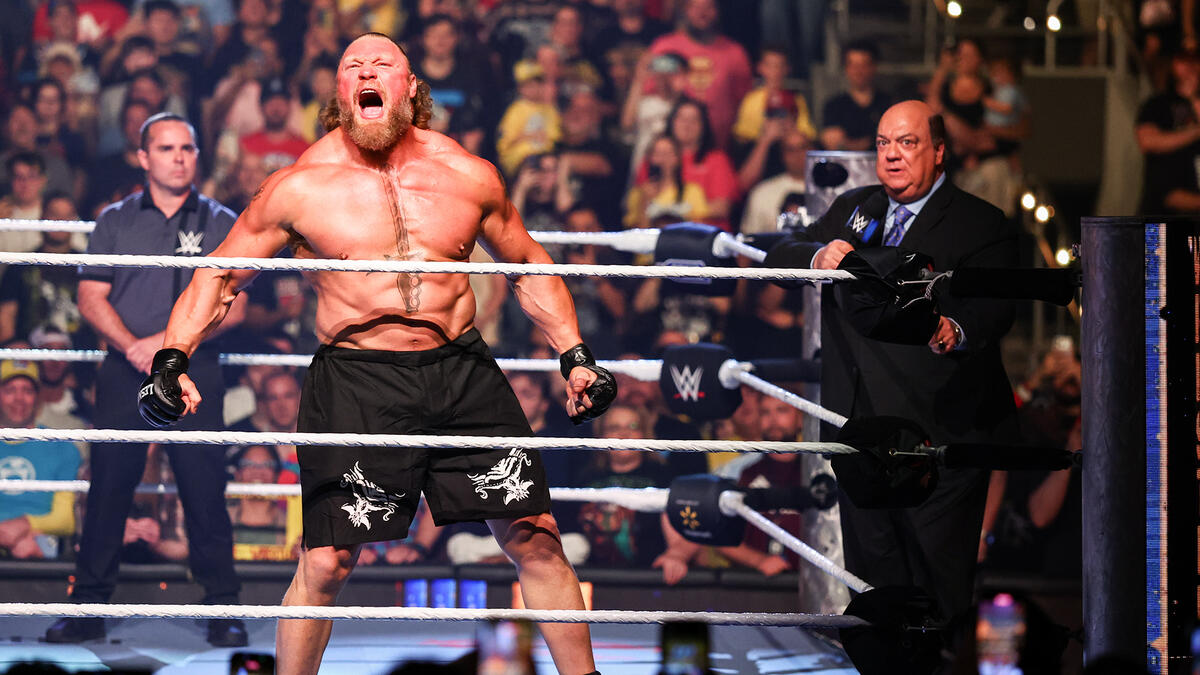
If The Rock’s return was the tremor, Brock Lesnar’s 2012 return was the tsunami. After eight years away conquering the UFC, Lesnar returned not as a roster member, but as a special attraction.
The “Part-Time Era” officially codified itself here. Lesnar didn’t do house shows. He didn’t do every Monday night. He showed up, threw some German Suplexes, collected a paycheck that eclipsed the combined earnings of the mid-card, and left.
By 2013, the main event scene was a closed shop for the aging elite:
The Rock ended CM Punk’s historic 434-day title reign.
The Undertaker, appearing once a year, became the ultimate gatekeeper.
Triple H remained the protagonist of every major storyline despite his executive duties.
The most egregious sin of this era remains the sacrifice of CM Punk. In 2013, Punk was the hottest commodity in the industry. He was the “Voice of the Voiceless.” Yet, he was forced to drop the title to a 40-something Hollywood actor (Rock) and then “do the job” for a near-50-year-old Undertaker. When Punk walked out in 2014, he wasn’t just quitting a job; he was fleeing a burning building where the exits were blocked by statues of the past.
The 2014 Rebellion and the Failed Pivot
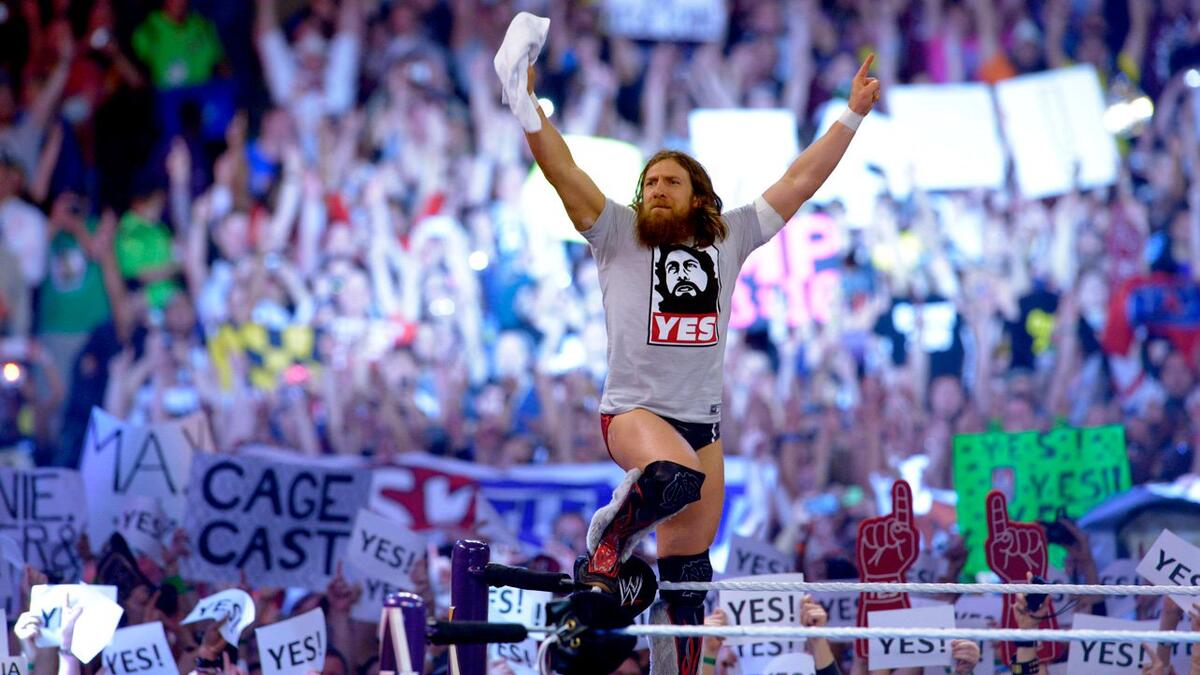
The WWE Universe isn’t stupid. By 2014, the resentment reached a boiling point. The return of Batista, another star returning from a four-year hiatus to immediately win the Royal Rumble, was the breaking point. The fans demanded Daniel Bryan, a man who represented the sweat and toil of the modern era.
While Bryan’s victory at WrestleMania 30 is remembered as a triumph, it was actually an anomaly. WWE didn’t want to give us Bryan; they were forced to because the alternative was a riot. As soon as the “Yes! Movement” died down, the company reverted to its comfort zone: feeding the hungry young lions to the silverbacks.
The Spear that Pierced the Future: Goldberg and the Devastation of Rising Stars
If the “Part-Time Era” was a slow-creeping fog, then Bill Goldberg’s 2016 return was a lightning strike that burned the house down. While the return of stars like The Rock or Brock Lesnar brought a certain level of technical skill or Hollywood prestige, Goldberg represented a different, more destructive archetype: the “Squash Artist.”
In the late 90s, Goldberg was a phenomenon built on three-minute destructions of “jobbers.” When he returned in 2016 at nearly 50 years old, WWE management decided to apply that same 1998 logic to the stars of the modern era. The result wasn’t just a loss for the young talent; it was a total erasure of their credibility.
The 22-Second Execution of Kevin Owens
In 2017, Kevin Owens was the Universal Champion. He was the quintessential “workhorse” champion, a man who had clawed his way through the independent circuit for a decade before finally reaching the mountaintop. His “Festival of Friendship” storyline with Chris Jericho was the most compelling piece of television WWE had produced in years.
At Fastlane 2017, the masterpiece Owens had spent months painting was trashed in 22 seconds.
WWE sacrificed their top full-time heel simply to use the Universal Title as a “prop” for the WrestleMania 33 attraction match between Goldberg and Brock Lesnar. Owens, who had been built as a cunning, dangerous champion, was reduced to a footnote. The “rub” didn’t go to a rising star; it went to a man who would leave the company shortly after.
The Death of “The Fiend”
Perhaps the most catastrophic example of Goldberg’s “star-killing” run came in 2020 at Super ShowDown. Bray Wyatt, reinvented as “The Fiend,” was the most protected and intriguing character in professional wrestling. He was an unstoppable supernatural force who had survived being burned alive and struck with dozens of finishers.
Then came the Jackhammer.
In a match that lasted barely three minutes, a 53-year-old Goldberg pinned The Fiend cleanly.
“It sent shockwaves through the community. I haven’t been as invested in a character as much as The Fiend in years… such a waste.” — Adam Pacitti, Wrestling Critic
By having a part-timer casually dismantle a “monster” that the rest of the roster couldn’t even dent, WWE effectively told the audience: “Nothing you see on Raw or SmackDown matters if a guy from the 90s shows up.” It took years for Wyatt to recover his aura, and many argue the character never truly regained the mystique that died in Saudi Arabia that night.
The “Shattered Glass” Ceiling
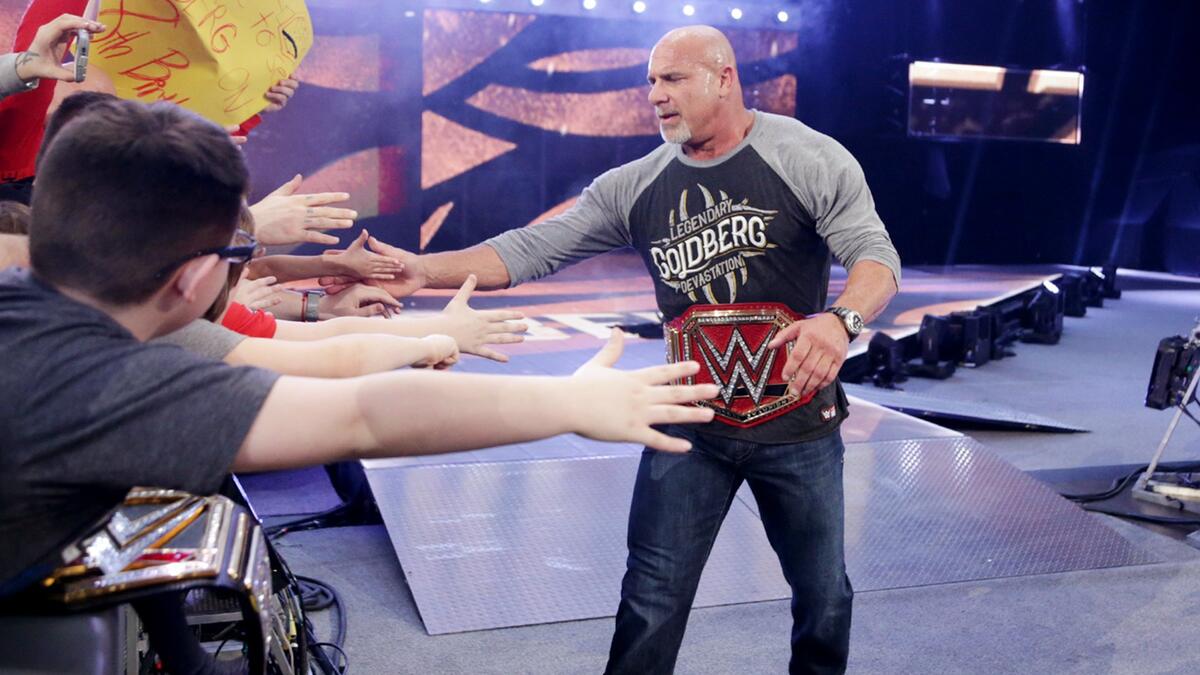
The damage wasn’t just limited to Owens and Wyatt. Goldberg’s presence created a “glass ceiling” for an entire generation:
The “Workrate” Fallacy: No matter how good your matches were (Seth Rollins, Dolph Ziggler, Bobby Lashley), you were always one “Spear” away from being rendered irrelevant by a man who couldn’t wrestle more than five minutes.
The Squandered Momentum: Stars like Braun Strowman and Rusev were built as “monsters,” only to have their momentum halted to make room for Goldberg’s limited-date appearances.
When we look at the current landscape, the question remains: Why should a fan invest 52 weeks a year in a full-time wrestler when they know a legend can fly in and hit a finisher in February to take the top spot in April?
Goldberg’s legacy in the modern era isn’t one of “giving back” to the business; it’s a record of a legend being used to satisfy short-term nostalgia at the cost of long-term stability. If WWE continues to allow the ghosts of the past to haunt the champions of the present, they’ll eventually find themselves with a roster of talent that the fans have been taught not to care about.
The Modern Dilemma: A Kingdom of Ghosts
Fast forward to today. The “Part-Time Era” hasn’t ended; it has simply evolved into its final, most stagnant form. We are now looking at a WrestleMania 42 landscape where the biggest rumoured match is CM Punk vs. Roman Reigns.
On paper, it’s a dream match. In practice, it’s a symptom of a terminal illness. Punk is approaching 50. Roman Reigns, the undisputed face of the company, has transitioned into a schedule so light he’s practically a mythic figure.
Where is the “Rocket Ship” push? Where is the next WrestleMania 21 moment?
At WrestleMania 21, WWE went “all in” on two young, full-time stars: John Cena and Batista. Since then, the “coronation” spots have almost exclusively been reserved for established names or the same three people for a decade.
By refusing to let the stars of the 2010s and 2020s truly “slay the dragons” of the past, WWE has created a generation of fans who believe that nobody matters unless they wrestled in 1999.
The Ring General’s Final Solution: Using Gunther to Kill the Ghosts of the Past
For over a decade, the “Part-Time Era” has been a parasite on the professional wrestling industry, feeding on the credibility of the current roster to sustain the legends of the 1990s. We’ve seen the damage. We’ve seen the Kevin Owenses and Bray Wyatts of the world flattened by the weight of nostalgia. But in 2026, a solution has emerged from the heart of Europe.
His name is Gunther, and he is the “Career Killer” the business desperately needs.
The “Sacred” Eraser
Gunther represents everything the part-time era is not. He is a purist. He is a workhorse. He is a man for whom the mat is sacred, and the “theatrics” of the past are an insult. Since his record-breaking Intercontinental Championship reign and his subsequent ascent to the World Heavyweight Title, Gunther has developed a gimmick that isn’t just about winning matches—it’s about ending delusions.
The “Career Killer” persona is the perfect antithesis to the Goldberg/Rock/Lesnar problem.
Where those stars represent a “get-rich-quick” scheme for WWE management, Gunther represents the cold, hard reality of the present.
How to Systematically “Put Them to Pasture”
WWE has a golden opportunity to use Gunther as the ultimate gatekeeper, the man who stands at the exit and ensures that when a legend returns, it is for the last time. Here is the blueprint for how Gunther can clean the slate:
1. The Death of the “Squash”
The primary weapon of the part-timer is the short, explosive match. To kill the part-time era, Gunther must do the opposite. When a legend like Goldberg or a returning icon challenges him, Gunther shouldn’t just beat them; he should deconstruct them.
Imagine a scenario where a returning veteran hits their “big” move, only for Gunther to stand up, adjust his boots, and proceed to chop their chest into a purple mess for twenty minutes. It shouldn’t be a competitive “back-and-forth”; it should be a lecture in physical reality. By the time the three-count hits, the legend shouldn’t look “heroic”, they should look old.
2. The “Stipulation of Finality”
Every Gunther feud against a part-timer should carry a “Sacred Mat” stipulation: If the veteran loses, they never lace up the boots again.
The Psychology: It frames the match as Gunther “protecting” the business from people who are only there for the paycheck.
The Result: It gives the legend a dignified, high-stakes exit while cementing Gunther as the man who turned out the lights on the Attitude Era.
By positioning Gunther as the man who “cleans the house,” WWE solves its biggest narrative problem. Instead of the young stars looking “weak” for losing to legends, the legends look “outclassed” by the modern standard of excellence.
Why This is Necessary for Survival
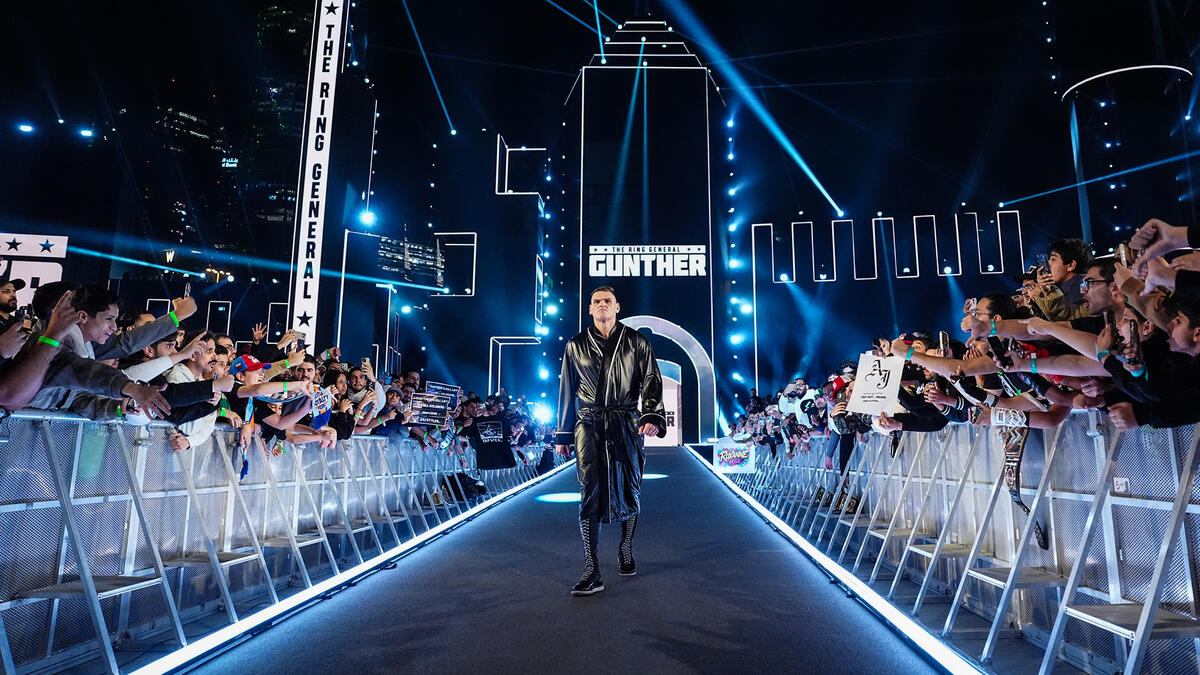
If we are heading toward a WrestleMania 42 headlined by stars who were in their prime ten years ago, the industry is on life support. Gunther is the surgeon.
He needs to go on a “Retirement Tour”, not his own, but a tour where he systematically retires the icons who have been hogging the spotlight.
When Gunther chops the life out of a “Hall of Famer,” he isn’t just winning a match; he is reclaiming the main event for the people who actually live and breathe this business today.
It is time to stop looking in the rearview mirror. It is time to let the “Ring General” execute the past so the future can finally breathe.
The Cliff’s Edge
The danger of relying on “Special Attractions” is that eventually, the attraction stops being special and starts being a crutch. You cannot build a future on the knees of men who require surgery after every three matches.
If WWE doesn’t pivot, if they don’t allow a 25-year-old to walk into WrestleMania and definitively retire the legends without a “redemption” arc, there will be no one left to draw a crowd when the last of the Attitude Era stars finally hangs up the boots for good.
The “Part-Time Era” was supposed to be a shot of adrenaline. Instead, it became a slow-acting sedative. It’s time for the industry to wake up before the lights go out for the last time.