Nathaniel Tatha-Nanandji, an independent promotor is suing TKO, WWE and 2K Games.
Tatha-Nanandji claims that they have stolen how he presented wrestlers as a part of WCWA Wrestling.
Calling the sequence Tier 1, he states that his production sequence is as follows:
a. The entrance, in-ring, or ringside action comes to a deliberate halt, and the Tier 1 members converge into a purposeful, hierarchical formation oriented toward the hard camera or primary broadcast camera, with the formation staged for frontal capture in a locked-off or minimally moving wide or mid-wide shot, ensuring all performers remain fully visible within the frame.
b. The group enters a brief but intentional pause, holding position while the camera framing remains fixed and centered, allowing audience attention to settle on the assembled faction and establishing the formation as a posed visual configuration rather than incidental movement.
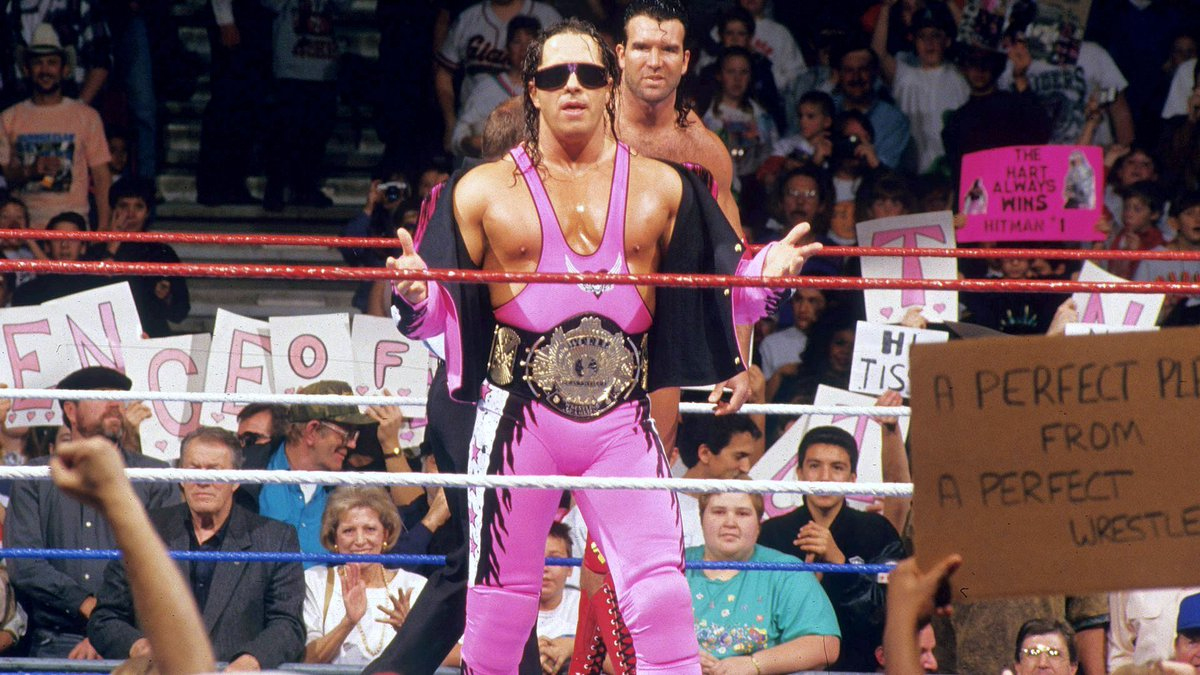
c. A designated leader or cueing performer initiates the sequence by raising one arm upward as a visual cue, typically captured in a low-angle medium or medium-close framing that visually elevates the cueing performer within the composition while maintaining contextual visibility of supporting members.
d. Other members follow in staggered but coordinated succession, each raising one arm with a single finger extended, as the camera holds its position or slightly widens to preserve group coherence, allowing the synchronized gesture to complete fully within frame and emphasizing collective participation rather than individual motion.
e. In post-beatdown or domination contexts, the camera remains deliberately positioned, most commonly in a locked-off or minimally adjusted wide or mid-wide frontal angle from ringside or hard-camera orientation, to include the subdued opponent within the same frame as the assembled Tier 1 members. The opponent is visually subordinated within the composition, while the faction occupies the dominant, upright portion of the frame, ensuring that hierarchy, submission, and control are conveyed through spatial and camera-based composition rather than motion.
f. The sequence culminates in a sustained, static, camera-facing tableau, commonly framed symmetrically and held for a perceptible duration without camera movement, functioning as a recurring visual punctuation mark that conveys hierarchy, loyalty, submission, and collective authority, among related expressions of unified control, before the sequence is released and the scene transitions.
He alleges that an unnamed indie wrestler who appeared on Smackdown showed WWE some WCWA footage and in the weeks following his sequence was being produced on WWE television, primarily by The Bloodline. That Bloodline sequence is also used in the video games.
Tatha-Nanandji claims he owns the copyright to the sequence and wants:
- The WWE to be legally prevented from using the sequence any longer.
- Damages and any profits the defendants created by use of the allegedly infringing material.
- The destruction of all infringing material.
- An order requiring defendants to provide full accounting and records of revenue and profits made from the allegedly infringing material.
- A declaration that the defendant’s “use of the Bloodline sequence and related audiovisual configurations” infringes on the plaintiffs’ ownership and constitutes unfair competition, and an order requiring corrective advertising to dispel any confusion between the two works, among other requests.
There is no word at press time on how the WWE will respond to this lawsuit.