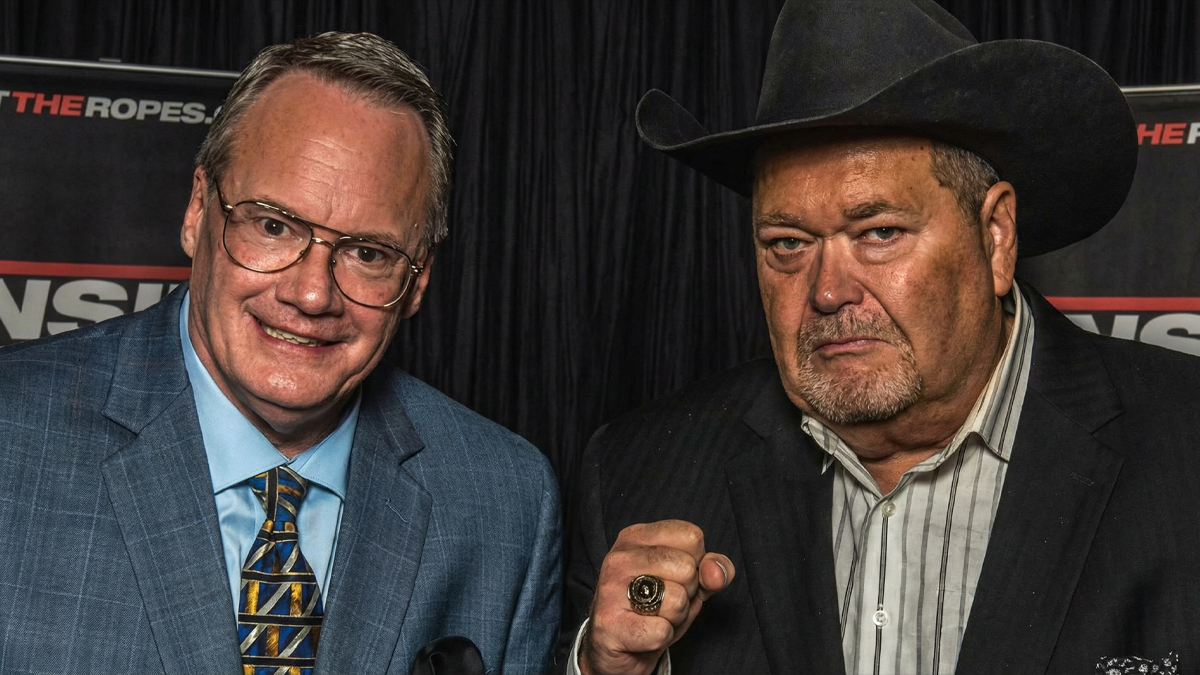
Jim Ross has opened up about one of the more controversial backstage shifts in WWE history, revealing fresh details about how he lost control of Talent Relations in 2003.
Speaking candidly about the transition on his Grilling JR podcast, Jim Ross reflected on the period when John Laurinaitis was positioning himself to take over as head of the department. According to Ross, while Laurinaitis’ ambitions were apparent, they were never directly communicated to him.
“John got bold and didn’t try to hide his agenda,” Ross said. “Through all that, never once did he come to me and say, ‘You know, JR, I’d like to be in charge of talent relations, and here’s why, here’s I’m qualified, and so forth.’”
At the time, Ross felt deeply invested in the role, having played a major part in assembling WWE’s roster during one of its most lucrative eras.
“I helped build this department. All those guys are on that roster that you’re seeing on television. I signed, so I got a vested interest in this deal, so I’m not ready to step away,” he explained.
Ross added that Laurinaitis continued pushing Vince McMahon behind the scenes, suggesting that image and corporate presentation may have factored into the decision.
“He was younger, and he looked good in a suit. He had pretty teeth, and look at me, I can’t even smile.”
Ultimately, McMahon sided with Laurinaitis. Ross said the decision was delivered politely, with McMahon expressing gratitude for his contributions before moving him into a new executive position.
“Vince sided with John and decided it was time, and he was very nice on the whole deal. He couldn’t thank me enough for my contributions,” Ross said. “I think it made me the EVP of business strategies, or I had some title, I don’t know. It’s meaningless. Didn’t matter.”
What Did Jim Ross Say Happened With His Role Change?
Although his salary remained unchanged, Jim Ross described the new role as largely symbolic. He even revealed that he continued handling payroll duties because the transition had not been properly communicated.
“I got in a conversation about something, and I said, ‘Well, I gotta hop. I gotta finish payroll.’ He said, ‘What do you mean you gotta finish payroll. That’s not your job anymore.’ I said, ‘I understand that, Mr McMahon, but your new guy doesn’t understand that.’”
Ross described payroll as an “arduous, mind-numbing responsibility” and admitted the entire situation was messy.
“It was a messy deal, shouldn’t have happened.”
Looking back, Ross expressed pride in the department’s accomplishments and pointed to the calibre of talent he signed during his tenure.
“Challenge anybody to come up with a roster and sign more stars, more now millionaires, more now Hall of Famers than had been done previously,” he said. “At the end of the day, I was okay with it. I didn’t like how it went down. I thought it was misleading.”
Ross concluded with a pointed remark aimed at Laurinaitis, saying the episode showed his “true” character. More than two decades later, Ross maintains that his record speaks for itself, regardless of how the internal politics played out.