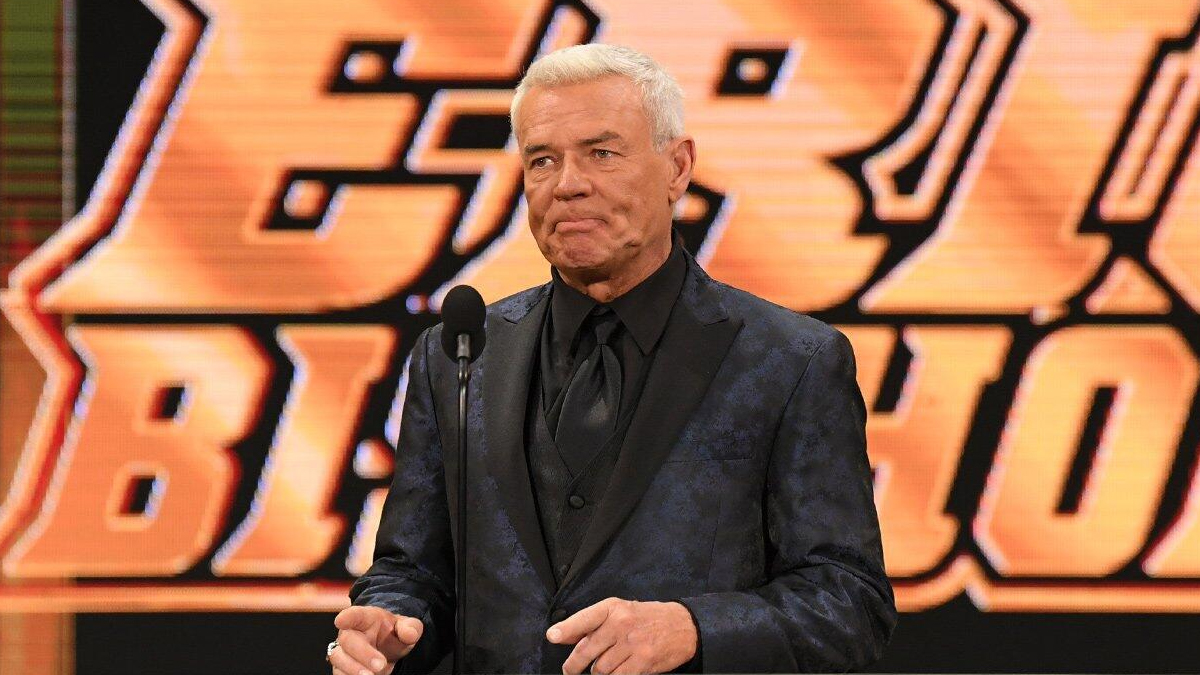
Eric Bischoff believes professional wrestling has evolved to the point where a good gimmick and consistent promos are no longer enough to become a major star.
Speaking on 83 Weeks, Eric Bischoff discussed the growing importance of promos and character development in modern wrestling, arguing that changes in how television is presented have placed greater demands on performers.
“The product has changed. Every aspect of the business has changed, but the presentation and the format,” Bischoff said.
Bischoff explained that he views a television format as more than a rundown of matches and segments, comparing it to a recipe that requires the right balance of different elements.
“I think the format for television has changed to the extent that it’s putting more pressure on the spoken word.”
According to Eric Bischoff, wrestlers once had a much easier path towards separating themselves from the rest of the roster.
“It used to be if you just had a good gimmick and your promos and you were consistent, you were in that upper 10 percentile bracket,” he said. “Now it takes a lot more than that, because the television audience has become so much more accustomed.”
Eric Bischoff Says Wrestling Storytelling Must Continue To Evolve
Eric Bischoff believes those increased expectations are partly the result of wrestling competing with the wider entertainment industry for viewers’ attention.
He pointed towards social media and artificial intelligence as factors that will continue raising the standard of entertainment audiences encounter on a daily basis.
“Social media, AI especially now, this is going to become even more challenging, because the level of performance that you’re surrounded by throughout your day is pretty good in the world of entertainment.”
Bischoff argued that professional wrestling must therefore continue developing its approach to storytelling and character development if it wants to keep pace.
“So if wrestling is going to keep pace, the storytelling aspects of wrestling are going to continue to meet a growing expectation from the audience,” he said. “Reliance upon the narrative word, and a much more sophisticated character development, is going to be a must.”
The former WCW President also dismissed the idea that simply recreating approaches that worked for wrestlers several decades ago will necessarily resonate with a modern television audience.
“The days of just going out there and, oh, it kind of reminds me of Terry Funk back in ’74. Good f**ing luck. That s**t won’t fly.”
Eric Bischoff argues that the standard required to reach the top of professional wrestling has increased significantly, with modern performers needing more developed characters and stronger storytelling skills alongside their in-ring work.