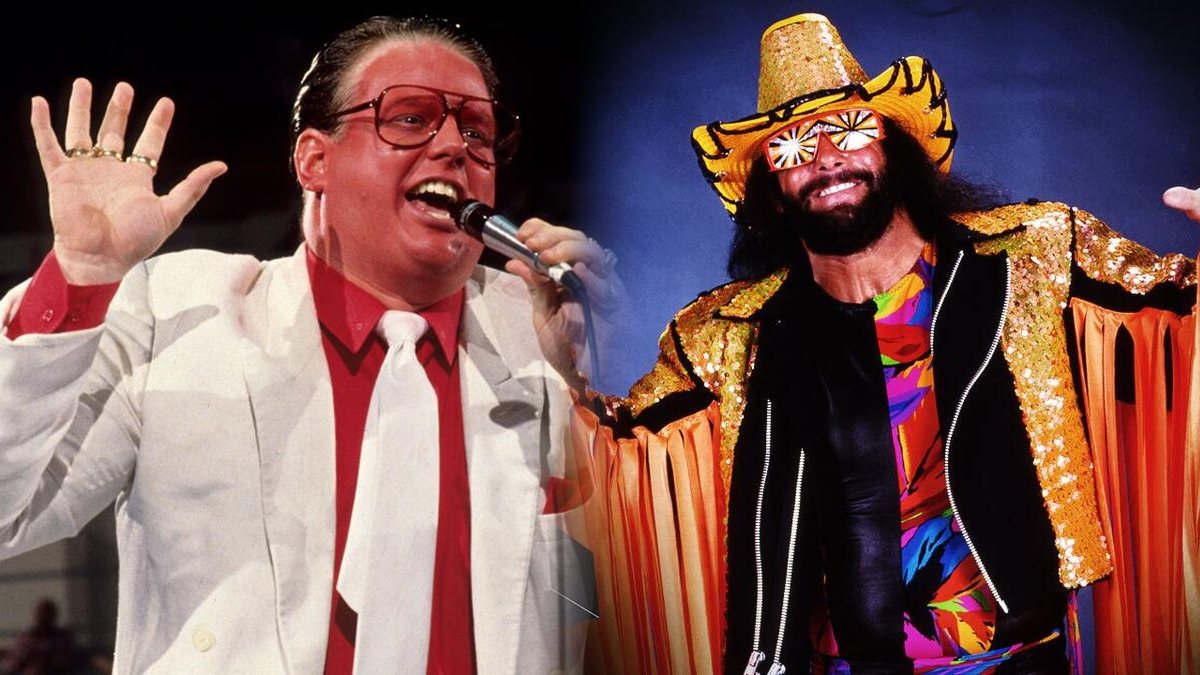
Randy Savage’s final years in WWE have long been surrounded by speculation, particularly claims that he wanted to wrestle more but was held back. According to Bruce Prichard, that version of events does not match what was happening behind closed doors.
Randy Savage’s first WWE run lasted nearly a decade, a period marked by iconic moments but also by reports of tension with Vince McMahon. By the early 1990s, “Macho Man” was wrestling less frequently before eventually leaving the company in 1994 and signing with WCW. There, he resumed a more active in-ring schedule before later wrapping up his career and making a brief return to the ring in TNA in 2004.
Speaking on Something to Wrestle, Bruce Prichard addressed the belief that WWE restricted Savage’s in-ring work against his wishes.
“That is a narrative that’s been out there for a long time: oh, Randy wanted to work, we didn’t want him to work,” Prichard said. “I am telling you from 100% personal experience with Randy Savage, from Randy’s own mouth: ‘I don’t want to take bumps anymore, I want to work behind the scenes, I want to be over here doing this.’”
What Did Bruce Prichard Say Randy Savage Said About His WWE Office Role?
According to Bruce Prichard, Randy Savage made it clear to WWE officials that he preferred transitioning into a more backstage and commentary role rather than continuing a full-time wrestling schedule. During that period, Savage became a prominent voice on commentary and relocated to Stamford to be closer to WWE’s headquarters.
“He wanted to work behind the scenes; he liked his gig, or at least he told us that he liked his gig as a commentator,” Prichard added. “He’d moved to Stamford so that he could be in the office, so that he could be there every day. That doesn’t sound like a guy who wants to go out on the road and work all the time.”
However, Prichard suggested that Savage may have presented a different account after signing with WCW, where he resumed regular in-ring competition and reportedly indicated that WWE had limited his opportunities.
Savage would go on to enjoy a successful run in WCW before stepping away from the business, only to make a short-lived return in 2004. While debate over his WWE departure has persisted for decades, Prichard maintains that Savage’s reduced schedule was ultimately his own choice at the time.