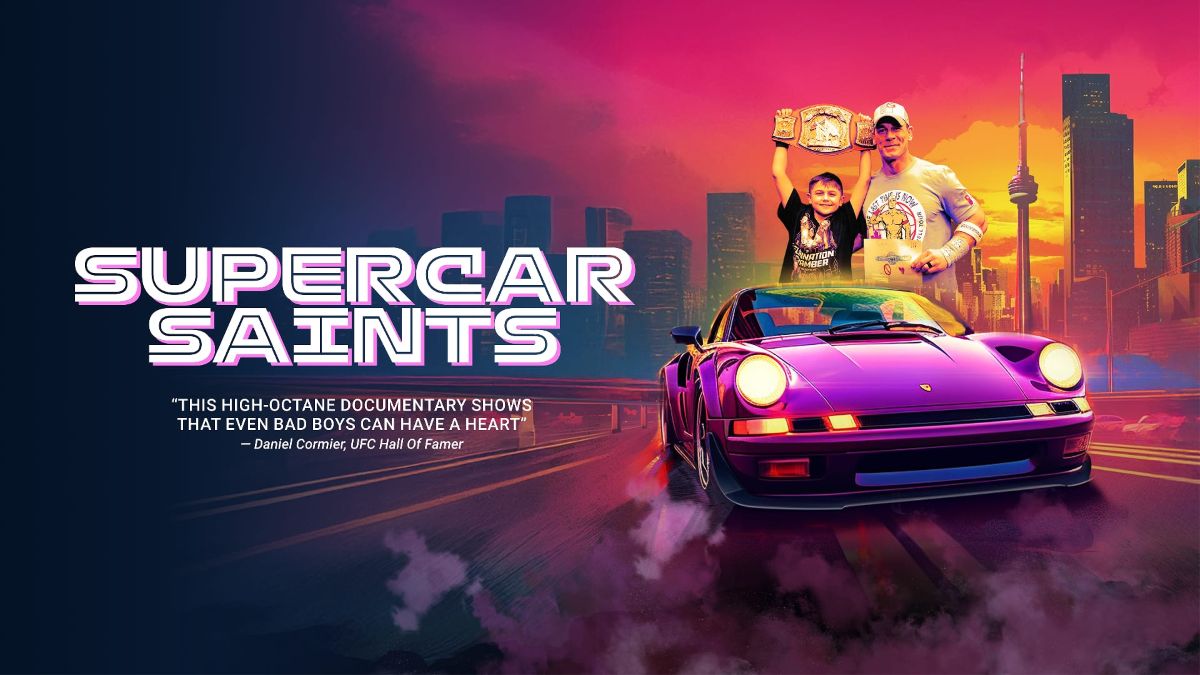
The only time you think about professional wrestling, fast cars, and a faster lifestyle is if the subject is centered around “The Nature Boy” Ric Flair. In the case of Supercar Saints, writer and director James Hergott delves into the topic with gusto; however, the difference is that, beneath all the bravado, there is a young boy with a rare brain condition that is the heart of this documentary.
Slamwrestling.net spoke to Hergott, who had written and produced The Striking Truth on Georges St-Pierre and directed the TV series Radical Body Transformations, about what first drew him to this project.
“So originally, I was following the supercar world within Toronto,” he explained. “It’s second to Beverly Hills and it’s number one in terms of McLaren sales yet [in] Toronto.”
He was primarily focused on the characters that inhabit this world, and then he described what can best be described as the beating heart of the documentary. “What happened is that we had this charity event for the supercar owners,” Hergott recalled, “and Steven is one of the kids that came out for it, and he just really kind of stood out. Because, first of all, he’s a very charismatic kid. He has a YouTube channel about wrestling, pro wrestling, and covers a bit of MMA as well, and he really connected with these supercar owners.”
Steven Spice, the “Saint” of this piece, is a boy who has a Chiari malformation. The Mayo Clinic describes this as brain tissue that extends to the spinal cord, with the skull pressing down on the brain and causing it to be forced downward. The Canadian has survived two brain surgeries, and become something of an influencer, raising money for awareness of his condition, and even drawing the attention of the individuals above and meeting MMA fighters like Daniel Cormier (who acts as a Greek Chorus narrating parts of the documentary), and even a meeting through the Make-A-Wish foundation with WWE legend, John Cena.
“And then I thought, ‘That’s an interesting story,’ because his parents lost their house because Steven has this brain condition, and he’s had to have a couple of major brain surgeries,” Hergott said. He’s gone through a lot of turmoil, and his family had to take a lot of time off work.
“They both work at Costco, and they lost their house because they couldn’t keep up with the bills,” he continued, “and they don’t even have a car. And the place that they live in is this apartment, where…like when you go to the apartment. It has signs out front saying, ‘Don’t raise rents.’ It’s [a] kind of impoverished area. And yet, you have these guys [the supercar racers] that…like one of the guys in the movie, spends $2 million [USD] on cars in one day. So, [I] like the juxtaposition and yet, at some human level, they connect.”
One of those moments in the documentary is when Spice attends a wrestling match with Swash Pawar, one of the big-name supercar racers featured in the film and an equally outlandish personality. They head to Battle Arts Academy (the Mississauga, ON gym owned by WWE/TNA wrestler Santino Marella), and at one point, two of the wrestlers (one being Trent Seven) have the action spill out of the ring, and Spice accidentally gets hit. This would not be an issue with a normal fan, but Spice is anything but due to his condition.
How did Hergott handle things at that moment? “The reaction was that ‘Oh my God!’, because Stephen was hurt. It’s very difficult, because it may seem like you’re uncompassionate, but when you’re doing a documentary, you literally have to film whatever happened.
“Your job as a documentary filmmaker, as cold as it may seem, is to film what’s going on, and what situations you may be most inclined to turn the camera off, is that’s actually when you should film, because that’s when something is happening. So, it’s a challenging line to balance,” he continued. “But of course, if there’s other people there, they can provide the medical care. They can be the sympathetic people. And in this situation, Swash was very sympathetic to him, which showed a different side of him for kind of the first time in the movie.”
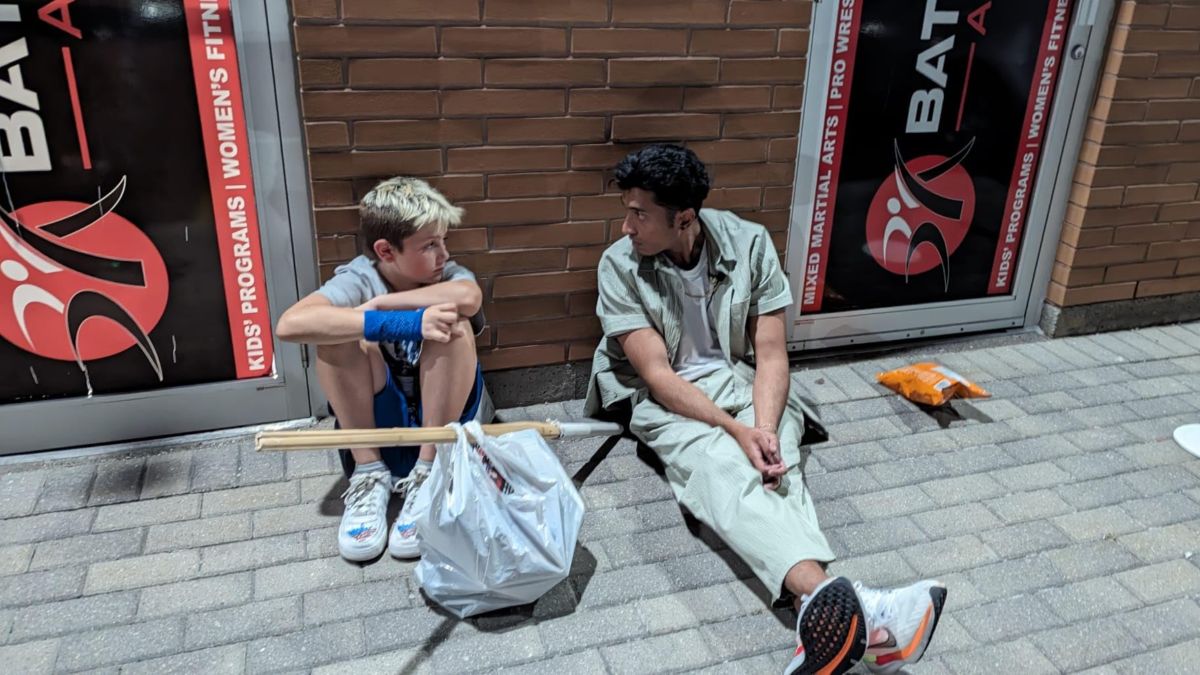
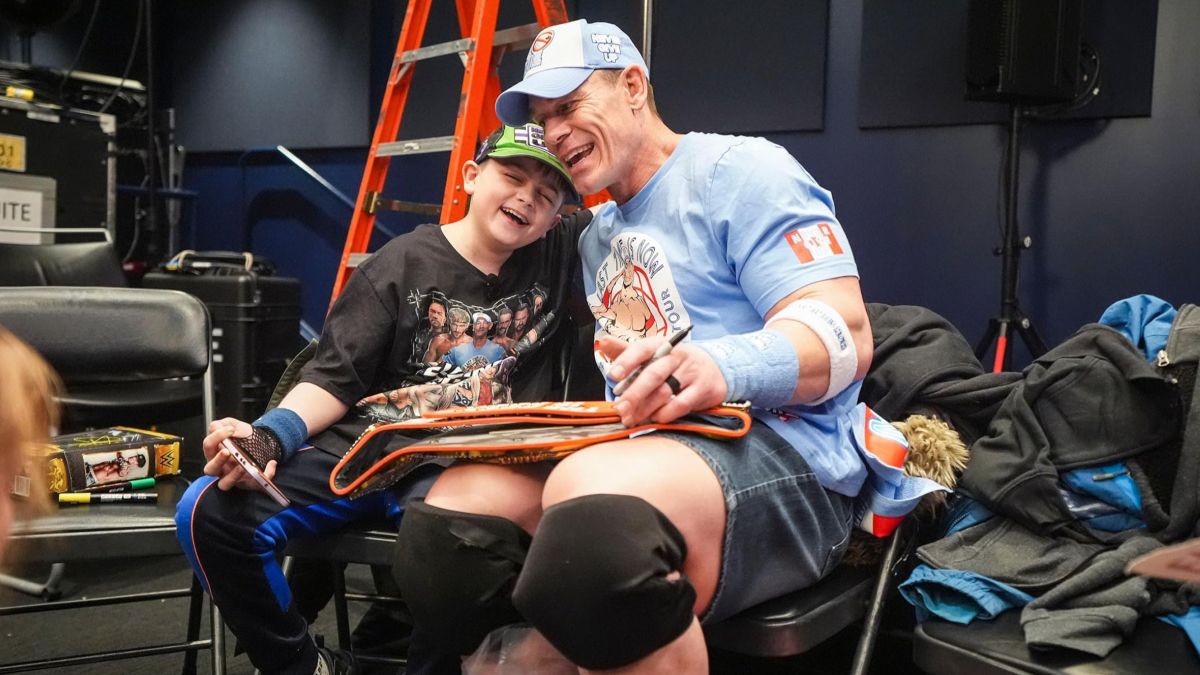
Later in the documentary, Spice gets a chance to meet John Cena before the WWE Elimination Chamber. We asked Hergott how he managed to help get access to the 17-time WWE champion, and the person who helped might surprise you.
“I initially reached out to Paul Heyman, and he probably wouldn’t want me to tell this, but I actually am going to give him his due on this,” he said. “He led me in the right direction on the people to reach out to at the WWE.
“[It] was very challenging, because I sent a lot of messages, and people didn’t get back to me at first, but eventually I made it through and through the WWE and the Make-A-Wish Foundation in the US, because they were coming up here, because even though it was Canada, they had some. Some of the kids that were coming up from New Jersey and things like that; they were going to be part of it.”
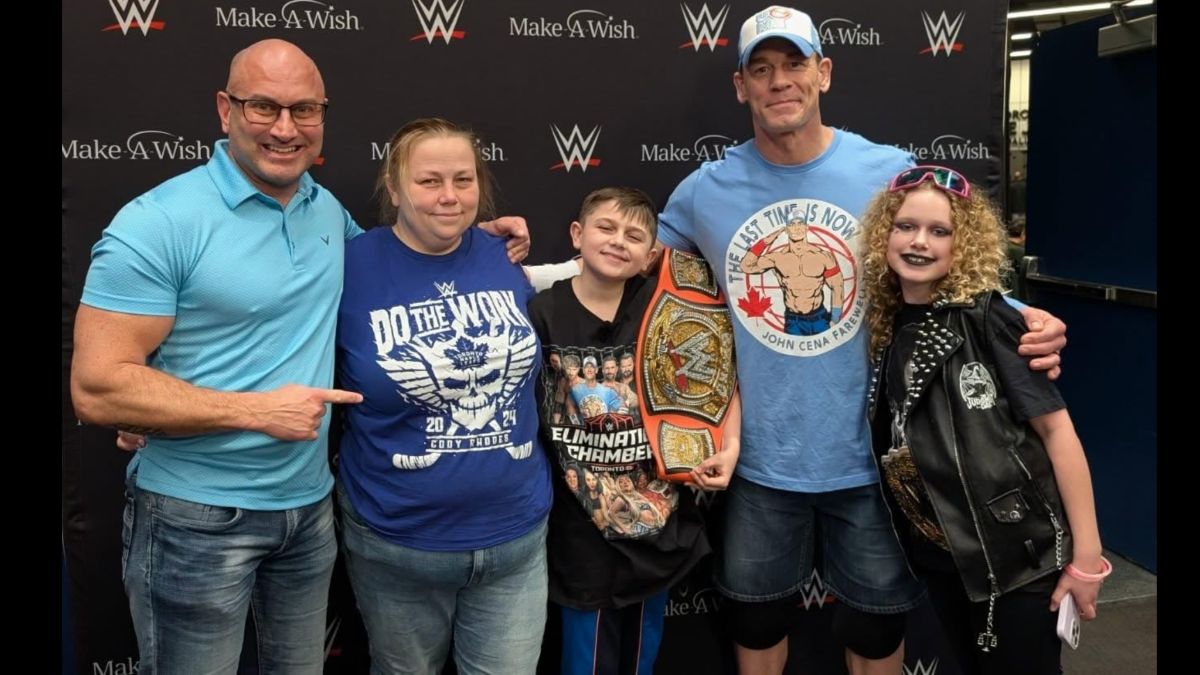
For a documentarian who tries to distance himself from his subject matter, you can tell that Spice’s attitude and positivity had left an indelible mark on Hergott. “I just had to kind of use the determination that like Steven has,” he explained, “where he says, ‘Never give up.’ I got to never give up. But because I, early on, wanted John Cena because Steven…[Cena] basically saved Steven’s life; that he was motivated to never give up from watching John Cena. I had that in my mind that that would be an amazing thing if he could meet him, and we could film that.”
On top of all that, Supercar Saints is in consideration for an Academy Award nomination for the Best Feature Documentary category. But that was not Hergott’s focus at the time. “This project was like three or four years to get done,” he said. “It was a long process, and the John Cena thing happened this past March, and then, as early as June, we were still filming scenes for it, so it kind of came together. It took a long process, but then when it finally came together, all the pieces of the puzzle were there. And I had spent so much money and time on this that I wanted to get it released.”
The documentary is currently available to view on the streaming platform Amazon Prime and, hopefully, will garner attention with other film festivals. As for the overall message of the film, Hergott captured it perfectly.
“There’s a great line where I asked Swash, ‘What did you learn from this?’ And he answered simply, ‘Heart.’ And I thought that was a very profound statement. I thought that the effect that Steven had normally, you don’t expect that a child is going to have an effect that makes people, especially adults, see the world differently. And I think that Steven did that.”
“The one thing that connects us all,” Hergott concluded, “is humanity.”