Editor’s Note: Talos, a member of the National Wrestling Alliance, reached out to Slamwrestling.net recently and informed us he will be doing a tour for the All-Japan Pro Wrestling promotion. Per Talos’ request, certain names have been changed to protect their anonymity. Plus, who are we to argue with a seven-foot giant?
Here is another excerpt of his recent adventures in the Land of the Rising Sun.
By Talos – For Slam Wrestling
Day 34: Feeling the “Press”-ure
Today started like most others. I rolled out of bed, poured myself a strong cup of coffee, grabbed a quick bite to eat, and got ready for the day ahead. But this one carried a different kind of weight; it was my first official press conference in Japan, and we were scheduled to leave for the Metropolitan Hotel in Chiyoda City within the hour.
With that in mind, I put a little more thought into what I wore. I hadn’t packed any suits for this trip, so I went with something sharp but comfortable: tan slacks, a long-sleeved maroon button-down, and a fresh pair of Jordans to pull it all together. I also threw a few essentials in my bag before heading out with another All Japan worker.

The drive from Yokohama to Chiyoda should’ve been straightforward, but Tokyo-area traffic had other plans. What should’ve been a quick 30-minute ride dragged into nearly two hours. The city feels like it’s in constant motion; a concrete maze layered in glass, steel, and neon.
Between the overlapping expressways, narrow surface streets, and densely packed buildings, the 14-mile stretch feels more like a cross-country haul. There’s so much happening — so many textures, scents, sounds — it’s easy to lose your sense of direction if you don’t stay grounded.
We pulled into the hotel around 11:30 a.m. and found a parking space close to the entrance. From the moment we stepped inside, the Metropolitan Hotel made an impression. The air was cool, carrying the scent of citrus and polished stone. The floors were gleaming marble inlaid with streaks of turquoise, and elegant staircases rose like waves through the massive open lobby. Crystal chandeliers hovered overhead like frozen fireworks, catching the light and throwing it across the walls in subtle sparks. The staff — dressed in pristine uniforms and bowing with practiced grace — directed us to the third floor, where the conference was being held.
There was a stretch of ballrooms down a long carpeted corridor, and waiting near one of them was Hiroki, along with several other All Japan staff members. After exchanging greetings and bows, I ducked into a small conference room that was doubling as our changing area. I found a seat at one of the side tables and started settling in.
Not long after, a man in a clean black suit approached. He was around average height, maybe mid-50s, with a short, neatly cropped haircut that had only the slightest traces of grey. He introduced himself as Ted, my interpreter for the press conference. I was immediately relieved. This was my first time handling Japanese media, and having someone experienced at my side was exactly what I needed.
We talked for a few minutes. Ted had been living in Japan since the late ‘70s — a military brat who ended up growing up here. His Japanese was flawless, and his calm demeanor made him easy to trust. He explained the format of the event: the press conference would happen in segments — starting with the junior heavyweights, followed by separate sections for each featured match.
After getting briefed and prepped, I finished getting ready and waited for our cue. The junior heavyweights went first. Then it was our turn.
We walked into a large, softly lit conference room with beige and brown accents. At the far end, a huge All Japan Pro Wrestling banner covered the back wall. Two tables were set in front of it, each with microphones, bottles of water, and nameplates. Facing us were rows of reporters seated at narrow tables, some taking notes, others getting their cameras set. In the center aisle stood a massive video camera, surrounded by a pack of photographers adjusting their lenses.
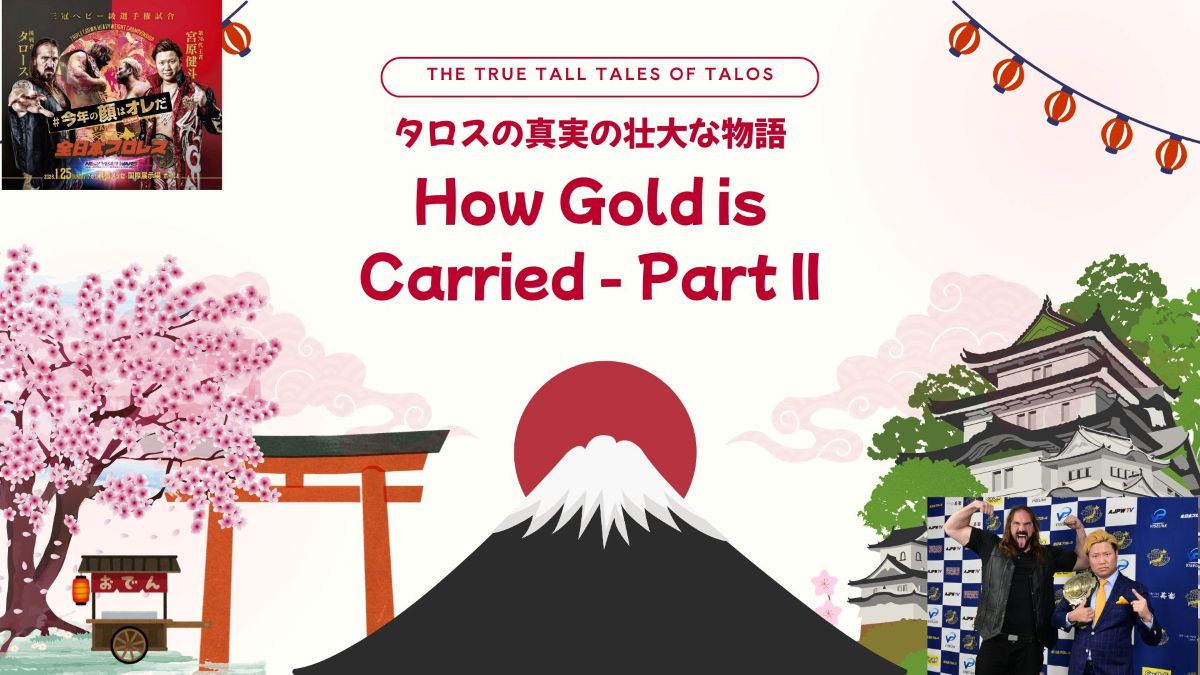
As our entrance music played, Hokuto and I walked in first, standing in front and center for the media wall. Flashbulbs popped. After a round of pictures, we sat at our table.
Next came Kento Miyahara and Yuma Aoyagi, the reigning tag team champions. They followed the same routine before joining us at the other table. The tension in the room was already rising.
The first question went to Hokuto. They asked what he thought would be different this time around, considering he’d faced our opponents before. This is where having Ted became crucial — context in Japanese is everything, and one misstep can send the message sideways. Hokuto answered with poise: he was older now, more seasoned, and had grown through experience. (Even if I had to restrain him a few times as he started getting a little too fired up.) But more importantly, he emphasized that this time, he had me in his corner, and that changed everything.
Then came a question for me: how I was enjoying Japan, and what I expected from this match. I told them I’d been enjoying Japan immensely — the culture, the food, the people — but when it came to the match, the mindset was the same as always: I step into that ring to win. Period.
And this time, it wasn’t just any match — it was a championship match. I was here for those belts.

That’s when things took an unexpected turn. Through the press Q&A, I learned that the current tag team titles were set to be retired after our match on July 17th. That raised the stakes even higher — we weren’t just fighting for titles; we were fighting to be the last team to hold them. Legacy on the line.
As the questions continued, we took turns responding, with Ted seamlessly translating everything back and forth. Things were rolling smoothly — until Yuma broke protocol. He pointed at Hokuto and me.
Now, anyone who’s spent time in Japan knows — pointing is a serious breach of etiquette. It’s disrespectful. I didn’t take it lightly.
The energy in the room shifted. We stood up. Voices rose. The heat was real. You could feel the electricity buzzing under the surface — sharp, tense, uncomfortable. But after a few tense moments and some subtle calming from the staff, we brought it back down. Cooler heads prevailed, but just barely.

We wrapped the session with a final face-off photo, the four of us squaring up for the cameras. The tension was so thick you could’ve sliced it with a katana. Once it was finished, we packed up, shook a few hands, and I thanked Ted again for his help before heading to the vans for the drive back.

Even though it was barely past 4:00 p.m. when we got back to the dojo, I felt completely drained — like someone had pulled the plug and let all the juice leak out. Still, I forced myself through a quick cardio session before dinner and called it a night early. Because tomorrow it’s right back to it.
This is Japan. No days off.